
What is Behind the Price of Pause Trailers?
Why do some trailers cost $40K, others $100K or more? For some, anything above $100K may sound ridiculous – but is it? Let’s unveil this pricing mystery together and take a closer look at conventional travel trailers and Pause trailers.
Purpose Comes First
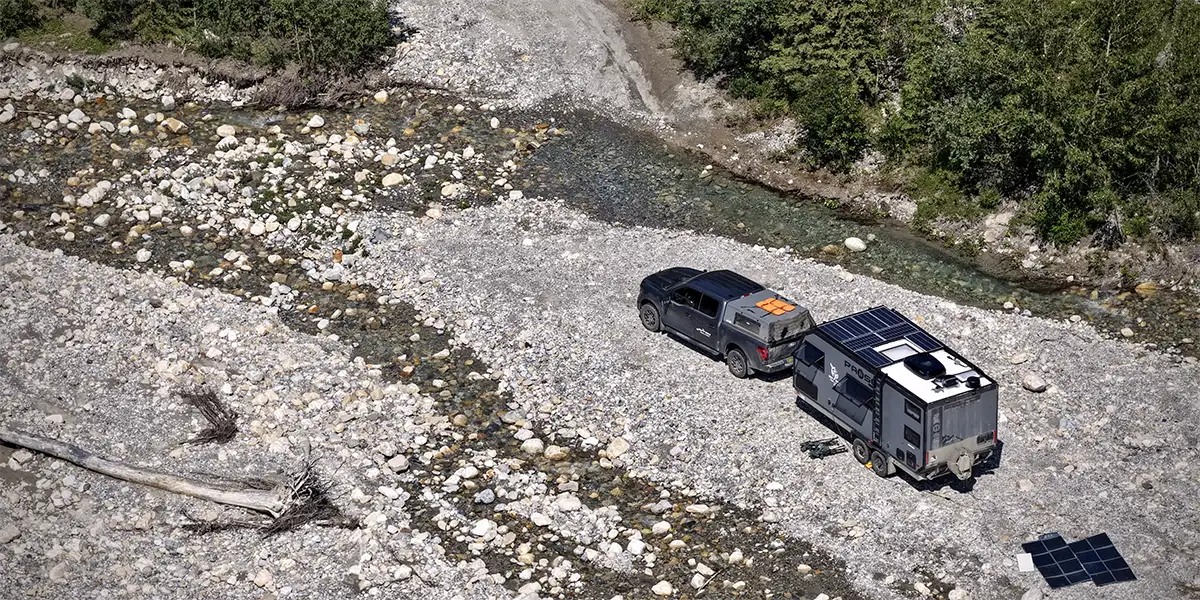
There is no universally “good” or “bad” trailer. A trailer can only be judged in relation to its intended purpose, the way it will be used, and the priorities of the person buying it.
For someone who travels a few weekends each year, stays primarily in established campgrounds, and spends most of the time on paved roads, a conventional trailer may be the most practical and financially sensible choice. That same trailer may be poorly suited to someone who travels for months at a time, regularly uses rough roads, camps without hookups, or depends on the trailer as a full-time living and working space.
The same principle applies at the other end of the market. A highly capable overland trailer may offer exceptional construction, suspension, energy storage, water capacity, and off-grid systems, but those features may provide little practical value to an owner who does not need them.
Most people who purchase a Pause trailer appear to be looking for greater freedom: the ability to travel on their own terms, reach less developed locations, and remain off-grid for longer periods without depending on conventional campgrounds.
However, off-grid travel and overlanding are not the only reasons people choose these trailers. We have met owners who purchased Pause primarily because they were looking for better construction quality. After becoming frustrated with the problems and limitations of a previous fifth wheel, they researched the RV market extensively, visited the Pause factory, examined how the trailers were built, and ultimately decided that the higher purchase price was justified by the structure, materials, systems, and manufacturing approach. Their priority was not necessarily to tackle difficult trails or pursue traditional overland travel. They wanted a trailer they believed would be more durable, better engineered, and less likely to repeat the ownership experience they had already gone through.
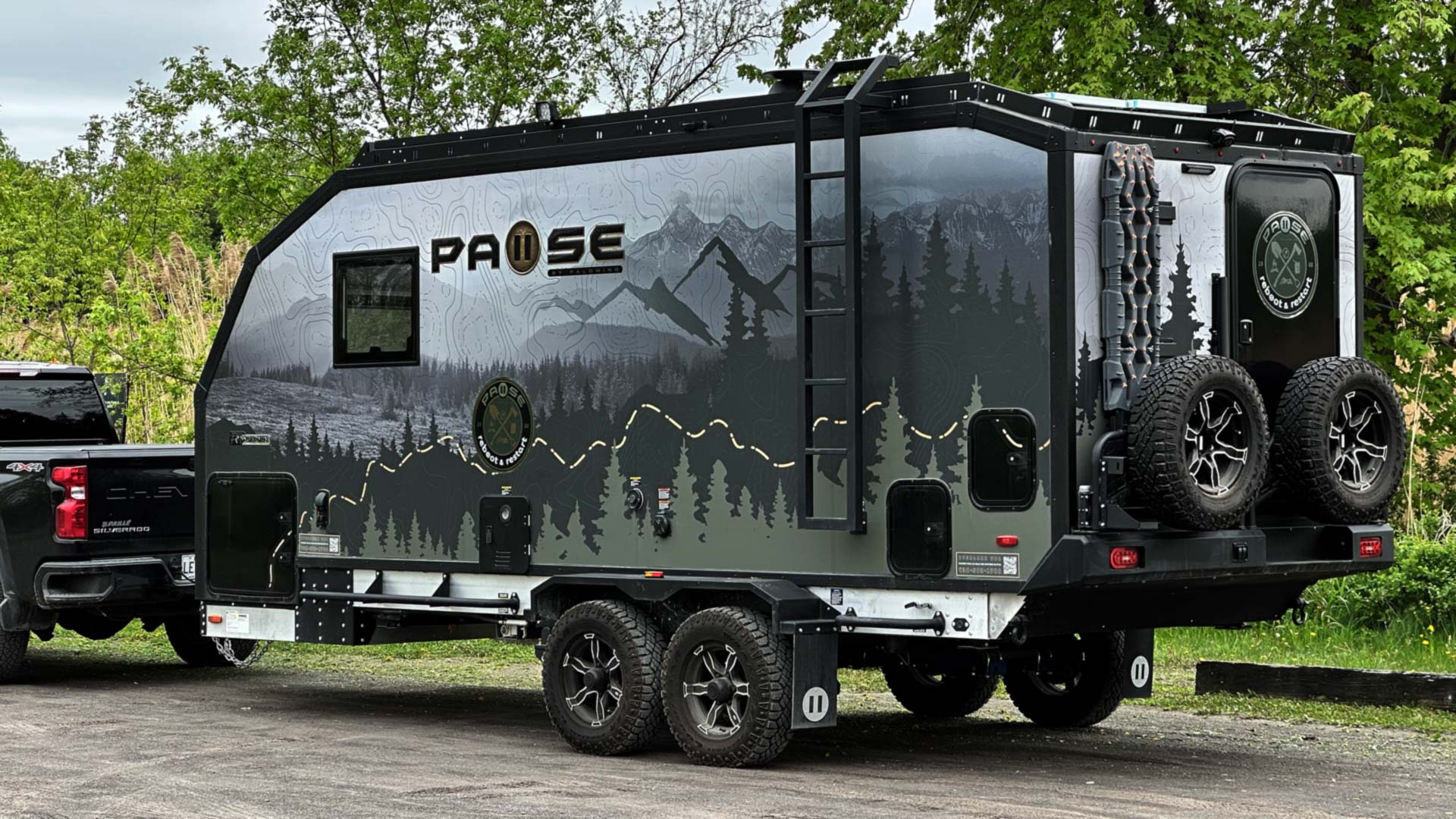
This is why the comparison should not be framed as a contest in which one trailer is declared better than another. The purpose is to explain the difference in price. A CAD $40,000 trailer may be the right choice for one person. A CAD $80,000–$100,000 trailer may provide the right balance for another. For someone who places a high value on extended off-grid capability, structural durability, system integration, or long-term ownership, a CAD $150,000–$200,000 trailer may also be a rational decision. The important question is: Which trailer is better suited to the way you intend to travel, live, and use it?
Note: This article will focus on the Pause, Pause X, and Reboot lineups. The core series Restart lineup, not mentioned in this article, is closer to the price range of more advanced conventional trailers, while still being a capable overland trailer.
Let’s begin, shall we?
Chassis
The Conventional Approach
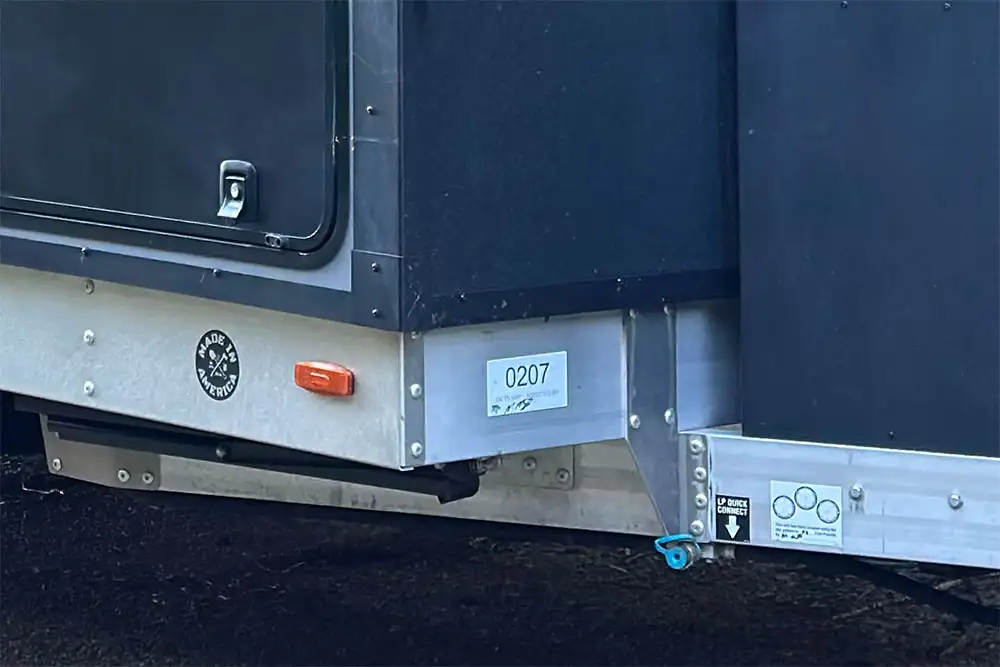
Many conventional travel trailers use a ladder-style steel chassis consisting of two main rails running from front to rear. Because those rails are considerably narrower than the trailer body, steel extensions called outriggers project sideways from the main rails. The important limitation is that the outer portions of the floor and walls are supported by projecting brackets rather than sitting directly over a continuous perimeter rail.
Over time, repeated road vibration and chassis twist create more movement at the floor edge, which contributes to springy floors, loosened fasteners, cabinet movement, door misalignment, and stress at wall-to-floor joints. The outriggers themselves also concentrate those loads into a small number of welded attachment points on the main rails, creating areas where fatigue cracks, corrosion, or deformation are more likely to develop.
Another major disadvantage of these chassis is corrosion. Once the steel’s paint or powder coating is damaged by stones, road salt, or abrasion, the exposed steel will rust.
The Pause Approach
Suspension
The Conventional Approach
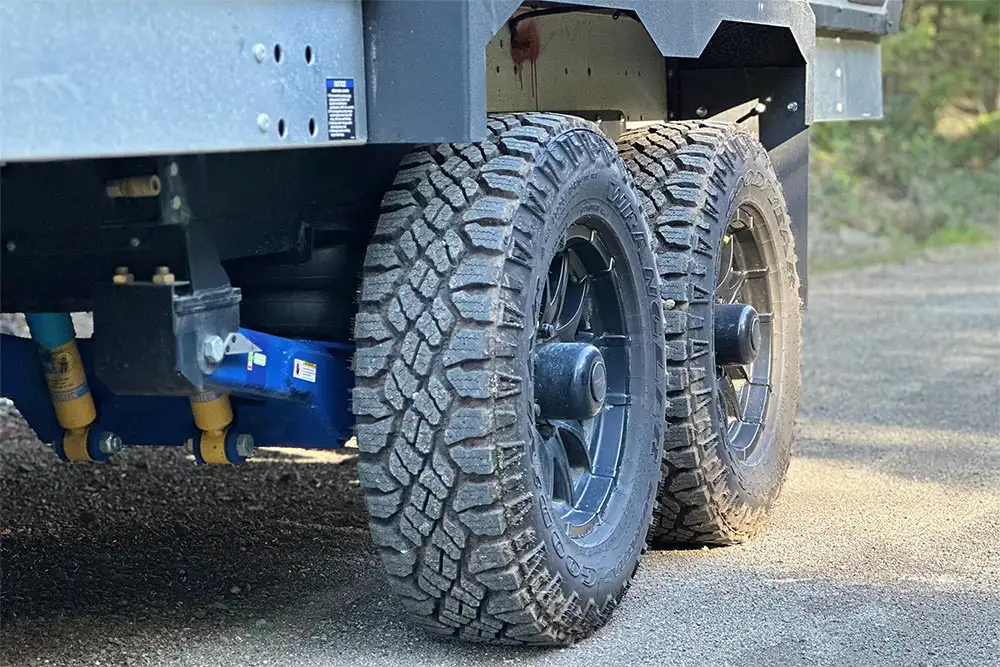
Most conventional travel trailers use solid beam axles suspended by steel leaf springs. It is a simple and economical system.
The trade-off is relatively limited wheel travel and greater transmission of road shock into the trailer. Because the left and right wheels are connected by an axle tube, movement on one side can also disturb the entire axle and body. Basic systems frequently rely on the leaf springs and tires to control motion, and typically do not include shock absorbers.
The Pause Approach
The Body and Insulation
From the outside, most travel trailers may look to some like variations of the same box. Under the surface, however, their floors, walls, and roofs can be built in very different ways.
The envelope must do more than keep out the weather. It must provide insulation, support windows and cabinetry, resist vibration, carry roof loads, and remain stable through years of temperature changes and moisture exposure.
For this comparison, it is useful to separate:
- Typical entry-level construction
- More advanced aluminum-framed construction
- Reboot and Pause X
- Flagship Pause
The Conventional Approach
Many lower-priced travel trailers use wood-framed walls and roofs with foam or fiberglass insulation between the framing members. Wood is affordable and easy to work with. However, it is vulnerable to water. If moisture enters through a window, roof penetration, corner joint, or failed seal, concealed wood framing, Luan, plywood, or OSB can absorb water, swell, rot, and lose strength. A typical layered wall may contain exterior fibreglass, Luan or another wood-based substrate, wood framing, fiberglass insulation, and interior decorative wallboard.
More expensive trailers often replace wood framing with aluminum, and some use insulation that is better than fiberglass, such as EPS. Aluminum does not rot and can provide a stronger, more dimensionally stable skeleton around doors, windows, cabinets, and large openings. However, its weakness is thermal bridging. In a conventional aluminum-framed wall, the studs may extend directly between the exterior and interior layers. Heat can bypass the insulation through the metal framing, producing colder strips on the interior wall when it is cold outside or hotter strips on the interior walls when it is hot outside.
Reboot and Pause X
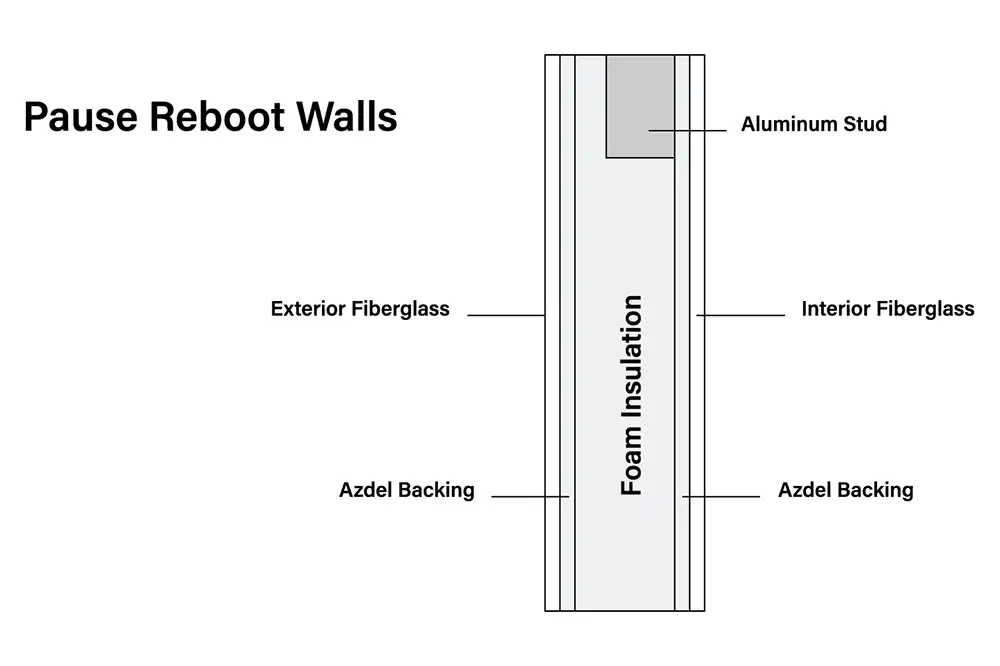
Reboot and Pause X use strategically positioned aluminum framing, with the wall design intended to reduce direct thermal bridging and prevent moisture damage. The wall includes exterior fibreglass, Azdel composite, high-density EPS, another layer of Azdel composite, and interior fibreglass.
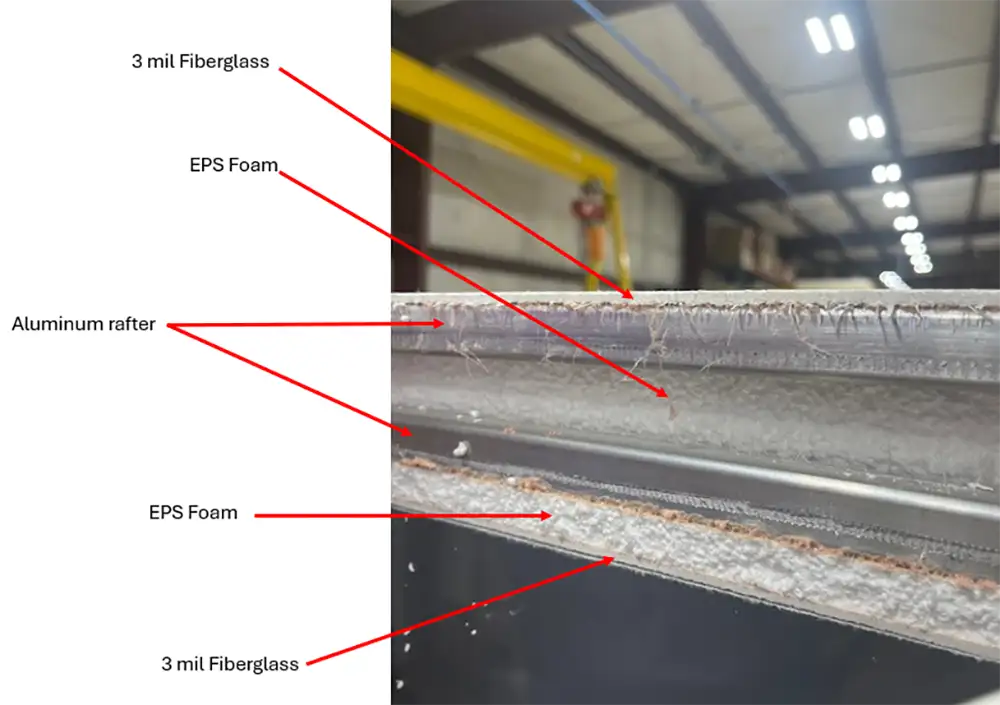
The Reboot and Pause X roofs use a thicker fibreglass exterior sheet, high-density EPS above the aluminum trusses, aluminum roof trusses, additional EPS beneath them, and finally, a fibreglass interior ceiling. This is different from a typical roof, where insulation is placed only between framing members, leaving the framing itself as a continuous thermal bridge. The one-piece, thick fibreglass exterior, supported by the aluminum frame, also provides a hard, seamless main roof surface rather than a flexible membrane. The completed roof is strong and fully walkable.
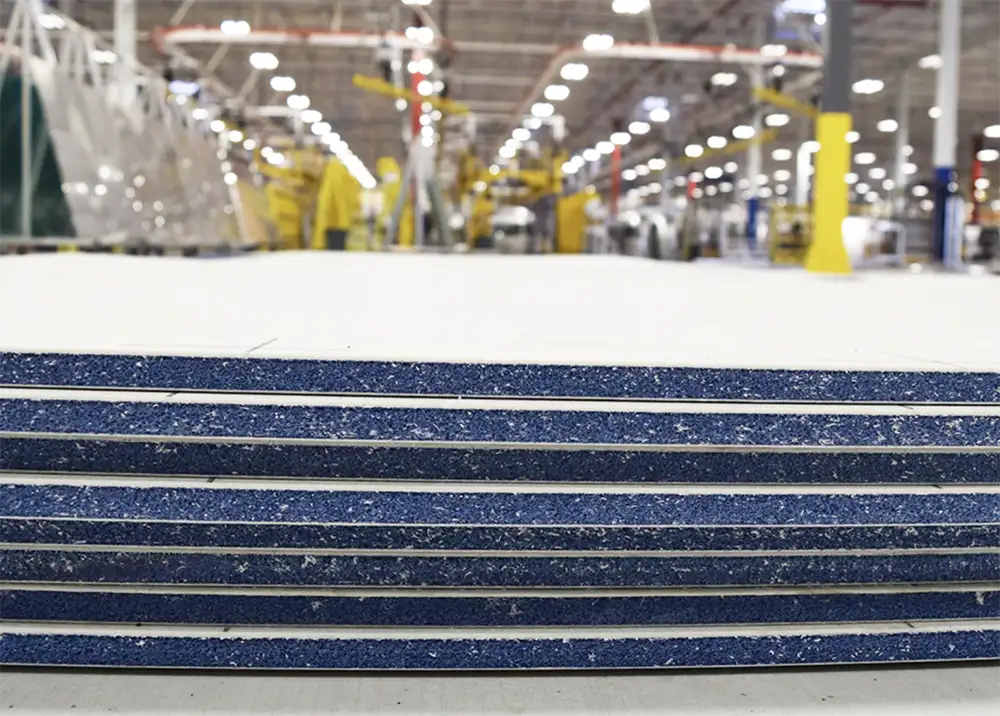
Reboot and Pause X use a TransCore composite floor rather than plywood or OSB. TransCore is a structural thermoplastic sandwich panel with high-glass-content skins thermally fused to a resilient thermoplastic core. It is lightweight, insulating, hydrophobic, abrasion- and puncture-resistant, and resistant to corrosion, mildew, and degradation. It is also presented as a one-piece waterproof panel that does not contain wood capable of rotting.
Because of their superior construction, Reboot and Pause X are considered multi-season trailers.
For reference, a well-known Airstream manufacturer also uses TransCore flooring in many of its trailers, but only flooring. Yet some Airstream models are priced similarly to or even higher than Reboot and Pause models. At the same price, and sometimes for less, buyers can choose a trailer that delivers the comfort, interior refinement, road manners, and everyday practicality expected from a premium conventional trailer, while also providing substantially more advanced chassis engineering, suspension, structural durability, multi-season performance, off-grid independence, and all-terrain capability. This is why price alone can be misleading: trailers that occupy the same premium price range may deliver very different levels of engineering, versatility, and long-term value.
Flagship Pause
The flagship Pause uses TransCore throughout the floor, walls, and roof, which is a big deal. This is not simply an aluminum-framed wall with a better substrate or more insulation. It is a different structural concept.
The skins and thermoplastic core are fused into a single composite panel. The outer skins resist tension and compression, while the core keeps them separated and transfers shear between them. The entire panel therefore acts as a structural element. The composite panels themselves contribute directly to the strength and stiffness of the body. Because TransCore is hydrophobic and contains no structural wood, it will not absorb water, rot, or support mildew. It is also impact-resistant, UV-resistant, and insect-resistant.
The full TransCore envelope also provides more continuous insulation than Reboot or Pause X across the panel area, without a conventional grid of aluminum or wood studs interrupting the core. Therefore, Pause’s multi-season performance is even better.
Pause & Reboot Protected and Heated Underbelly
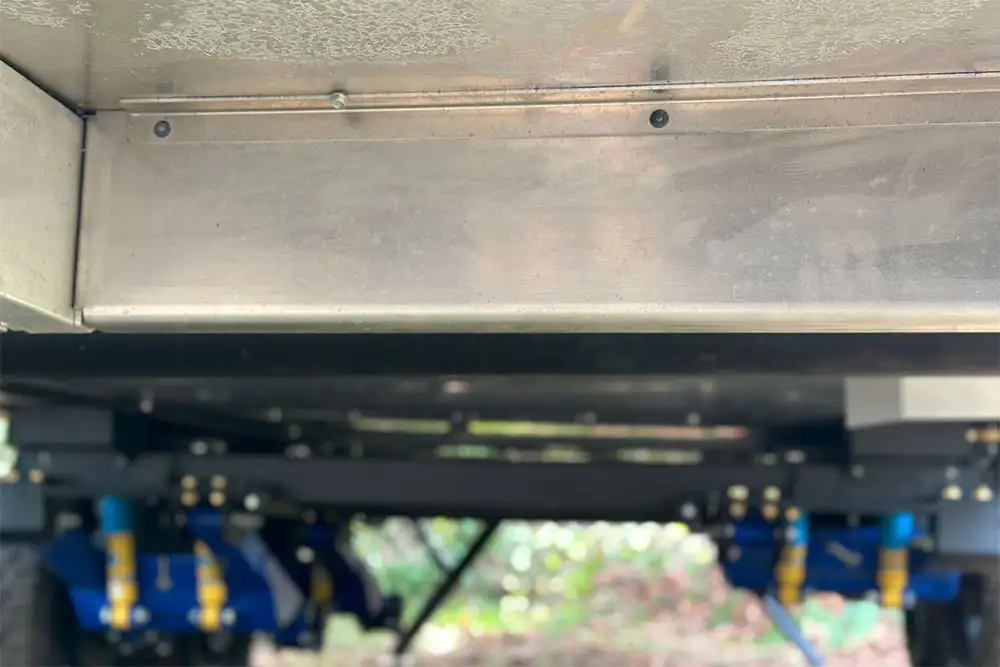
The floor itself is only part of the structure. What sits beneath it is equally important. On Pause and Reboot, the underbelly is enclosed with aluminum plating rather than lightweight corrugated plastic or fabric. This creates a durable protective barrier beneath the trailer, shielding the tanks, wiring, plumbing, and other vulnerable components from harm.
Above the aluminum plates is one inch of high-density insulation. The edges are additionally sealed with sprayed foam to reduce air leakage and help create a tighter thermal enclosure. All water tanks are fitted with heating pads, and the underbelly is also ducted on all Pause and Reboot models equipped with the Truma winter package, allowing warm air to circulate through the enclosed space. This gives the trailer two forms of freeze protection: direct electric heat at the tanks and warm-air circulation around the plumbing and underfloor systems. That is a major difference from many conventional trailers, where the underbelly may be covered only by thin corrugated plastic, with limited insulation and portions of the plumbing still exposed to cold air and road damage.
Electrical Power
The Conventional Approach
Most conventional travel trailers are designed around shore power. When connected to a campground hookup, the air conditioner, microwave, wall outlets, and other 120-volt appliances operate normally. A small 12-volt battery supports the lights, water pump, furnace controls, and other basic functions when the trailer is unplugged.
For owners who normally use serviced campgrounds, this is practical and economical. Away from shore power, however, the limitations appear quickly. A small lead-acid bank has limited usable capacity. Discharging it deeply shortens its life, charging is comparatively slow, and voltage falls noticeably as the battery empties.
Some more expensive conventional models are advertised as “solar ready” or include one or two roof panels. One or two solar panels may maintain a battery or replace light daily consumption. Their value remains limited when the trailer has little storage, a basic charge controller, no substantial inverter, and no coordinated way to monitor generation and use.
Solar wattage alone does not determine off-grid capability. The trailer must be able to collect the energy, store it, convert it, distribute it, and tell the owner what is happening.
The Pause Approach
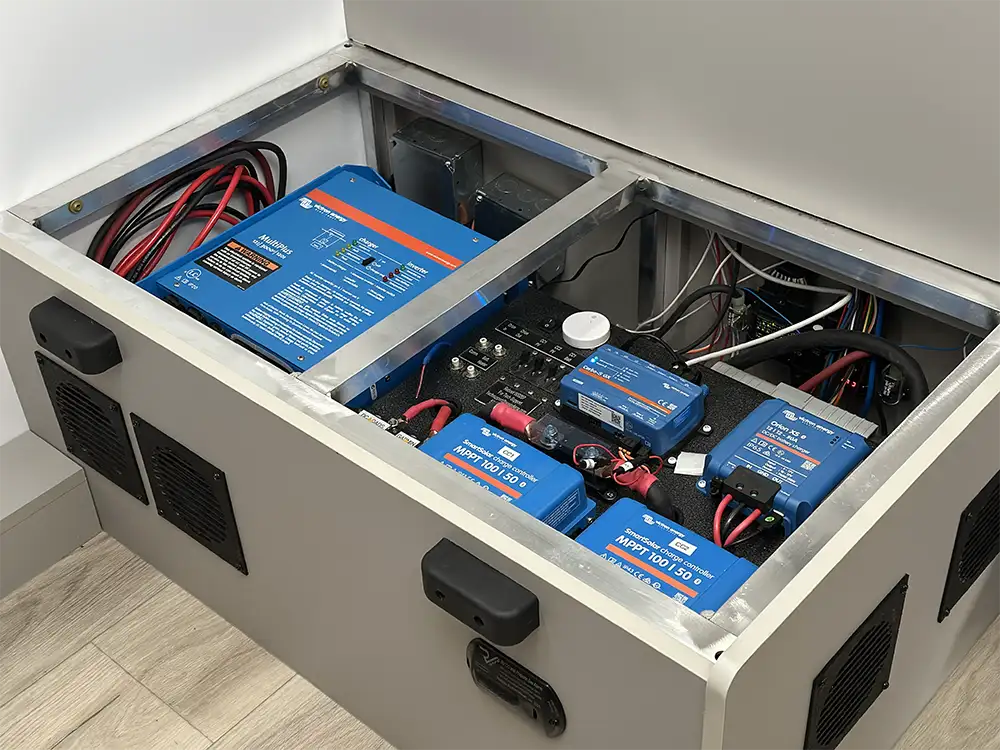
At the centre is a Victron MultiPlus 3000-watt inverter/charger. It converts battery power into clean 120-volt AC electricity when the trailer is off-grid, charges the batteries when shore or generator power becomes available, and automatically manages the change between power sources. Its PowerAssist capability can also supplement a limited external connection with battery energy when demand temporarily exceeds what the source can provide.
Separate Victron MPPT controllers manage the permanent roof array and additional portable solar panels. The two arrays can operate independently, which is valuable when the trailer is parked in the shade but portable panels can be positioned in direct sunlight.
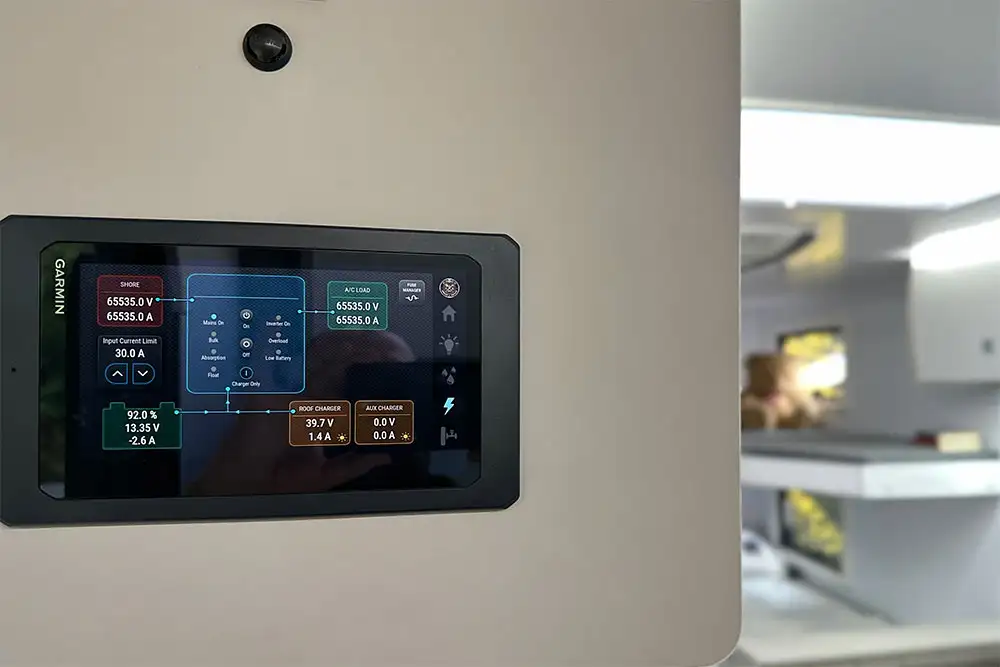
A Victron GX communication centre acts as the system’s brain, combining information from the battery bank, inverter, solar controllers, and other charging sources. The owner can monitor solar production, battery condition, electrical consumption, and system history from one interface rather than trying to interpret several unrelated displays.
The dedicated DC-to-DC charger and Anderson connection also allow the tow vehicle to supply meaningful, correctly regulated charging while driving. This is considerably more effective than relying only on the relatively small auxiliary charging circuit in a typical seven-pin trailer connector.
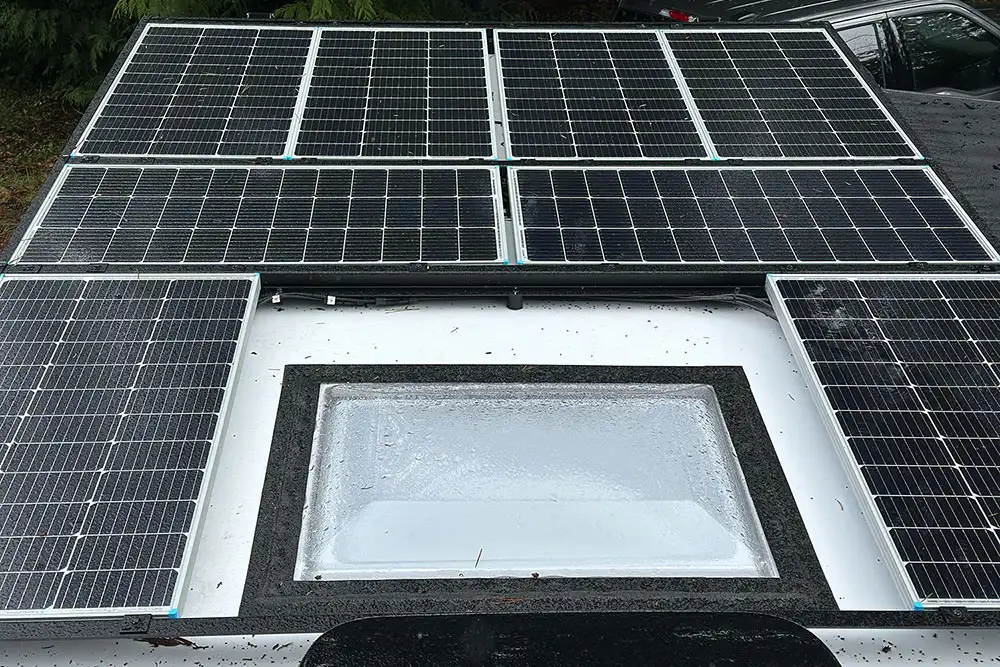
Consider using Starlink as a simple example. It normally consumes approximately 60–70 watts. Dividing approximately 13,000 Wh (1,080Ah) by that load gives a theoretical result of roughly 200-plus hours of operation if Starlink were the only device running and no new energy entered the system.
As we can clearly see, Reboot and Pause are designed to produce, store, manage, and replenish enough electricity to remain functional when shore power is not available.
A Ball Hitch
The Conventional Approach
The Pause Approach
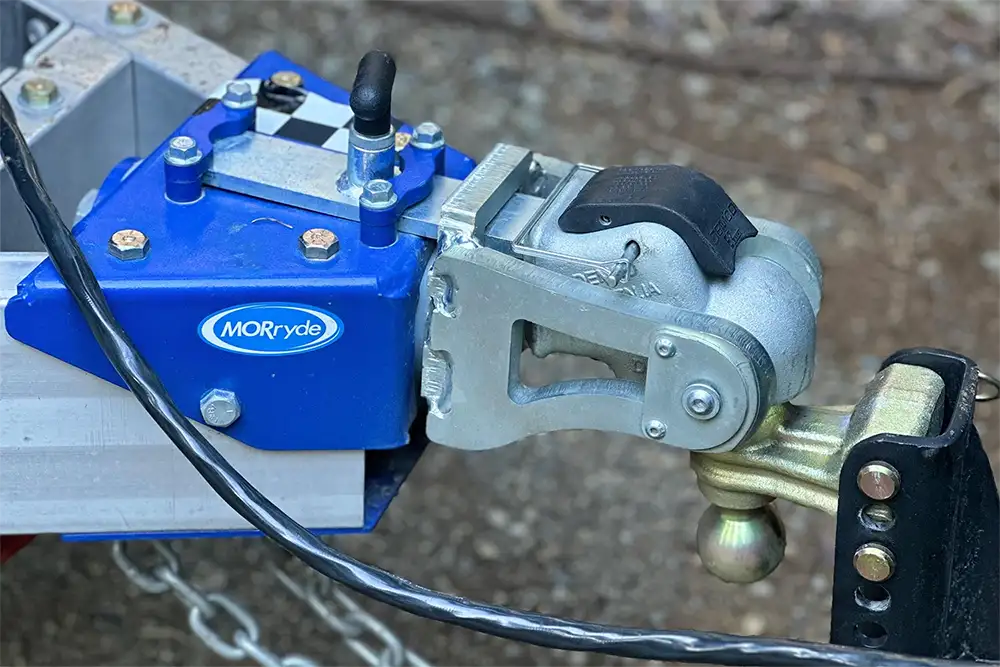
Pause uses a hitch assembly that can articulate vertically and horizontally.
The MORryde system adds two dedicated pivot points behind the ball. One allows the ball mount to move horizontally, while the other allows it to move vertically. The ball-and-coupler connection still provides the rotational movement needed when the truck and trailer lean differently. This becomes useful when the truck and trailer are no longer travelling on approximately the same plane.
For example, the truck may begin climbing out of a washout while the trailer is still descending into it. The vertical pivot allows the hitch to follow that change in angle instead of requiring all of the movement to occur within the ball coupler. When turning on uneven terrain, the horizontal pivot provides additional movement while the ball connection accommodates the difference in lean between the truck and trailer.
What Else?
Just a few more examples: Pause and air-ride Reboot models include an onboard compressor and air tank. This system operates the suspension, but it can also inflate trailer and tow-vehicle tires.
Propane cylinders are housed inside a coated metal A-frame enclosure rather than sitting exposed beneath a lightweight plastic cover.
Other features include pre-wired tow-vehicle Anderson charging connection, factory-installed TPMS, observation cameras, dual-pane windows, robust roof access, hot-and-cold exterior water, a high-end legless awning with a wind sensor, an exterior kitchen with a fridge, and a central control and monitoring platform by Garmin. Inside, the cabinets and drawers are designed for movement. The flagship Pause models and Pause X use aluminum interior, which makes these trailers moisture-proof.
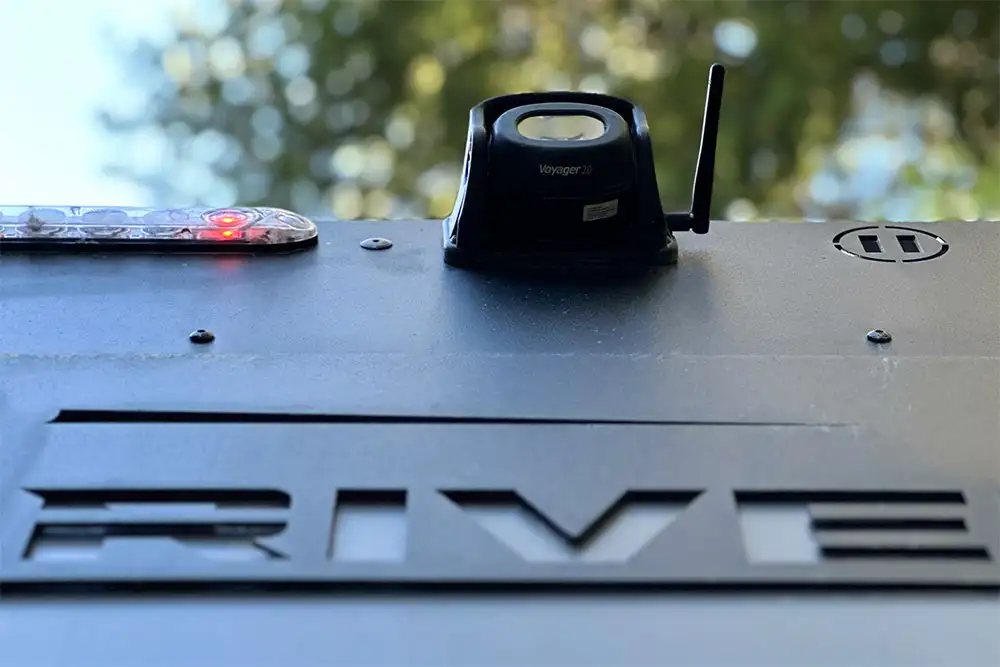
All Pause trailers and upgraded Reboot models also use coordinated Truma comfort systems:
The VarioHeat furnace can reduce its output once the trailer reaches temperature, helping maintain steadier heat with less noise and lower propane and electrical demand.
AquaGo heats water as it is used instead of relying on a small storage tank. This avoids waiting for another tank to reheat and provides more consistent hot water at the low flow rates often used off-grid.
The Aventa air conditioner is designed around efficiency, quieter operation, reduced startup demand, and dehumidification. Air conditioning still consumes substantial power, but a more efficient unit places less strain on the inverter, batteries, solar array, generator, or shore connection.
A Simple Pricing Exercise
The price difference becomes easier to understand when the major systems are priced separately.
Consider the core Victron Energy package installed in Pause:
- Cerbo GX monitoring and control system
- MultiPlus 3000 inverter/charger
- DC-to-DC charger
- Two MPPT solar controllers
At current retail pricing, these components alone total approximately CAD $2,700 – 3,000.
Now add four 270 Ah Battle Born self-heating lithium batteries at roughly CAD $3,200 – $3,400 each. The batteries add another CAD $12,800 plus, bringing the equipment subtotal to approximately:
CAD $15,500 – $17,000. Some conventional trailers sell for around CAD $40,000. The uninstalled batteries and core Victron components in a fully equipped Pause or Reboot already approach 40% of that entire trailer’s purchase price. And that is only the loose equipment. Nothing has been installed, connected, programmed, or tested.
The figure still excludes:
- Solar panels and mounting hardware
- Portable solar connection
- Heavy battery and inverter cabling
- Busbars and distribution equipment
- Main battery disconnects
- High-current fuses and circuit protection
- Battery mounting and containment
- Anderson connection and tow-vehicle wiring
- Monitoring display and sensors
- Installation labour
- System programming
- Testing and commissioning
A 12-volt system with more than 1,000 Ah of lithium storage and a 3,000 VA inverter can move hundreds of amps. It requires carefully sized conductors, professional terminations, robust protection, proper ventilation, and an installation designed to withstand vibration. By the time solar generation, wiring, protection, engineering, and labour are included, the complete electrical system represents a very significant portion of the price of an entry-level trailer.
This is why comparing the trailers only by their length, floorplan, or number of beds is misleading.
It is much like comparing a Mitsubishi Mirage with a BMW 7 Series because both have four doors, seats, and an engine. Both can serve their intended purpose, but they are not built from the same components, engineered to the same level, or designed to deliver the same capability.
Final Thoughts
The purpose of this comparison is not to suggest that every buyer needs a Pause or Reboot, or that a lower-priced trailer is a poor choice. A conventional trailer may be exactly right for someone who travels occasionally, stays mainly in serviced campgrounds, and does not need extensive off-grid capability or rough-road durability. The goal is simply to explain why trailer prices can vary so dramatically.
Once the custom chassis, independent suspension, composite structure, protected underbelly, lithium energy system, integrated controls, climate equipment, monitoring systems, and dozens of smaller details are considered together, the price difference becomes far less mysterious. Buyers are not paying only for a bed, kitchen, and bathroom. They are paying for the materials, engineering, equipment, labour, and integration required to create a trailer designed to travel farther, remain off-grid longer, and withstand more demanding use.
That additional capability will not be valuable to everyone. But for owners who want greater independence, durability, comfort, and confidence in how their trailer is built, the higher price can represent real and understandable value.
The best trailer is not necessarily the cheapest or the most expensive. It is the one whose design, capability, and cost genuinely match the way its owner intends to travel.
Thank you for reading.
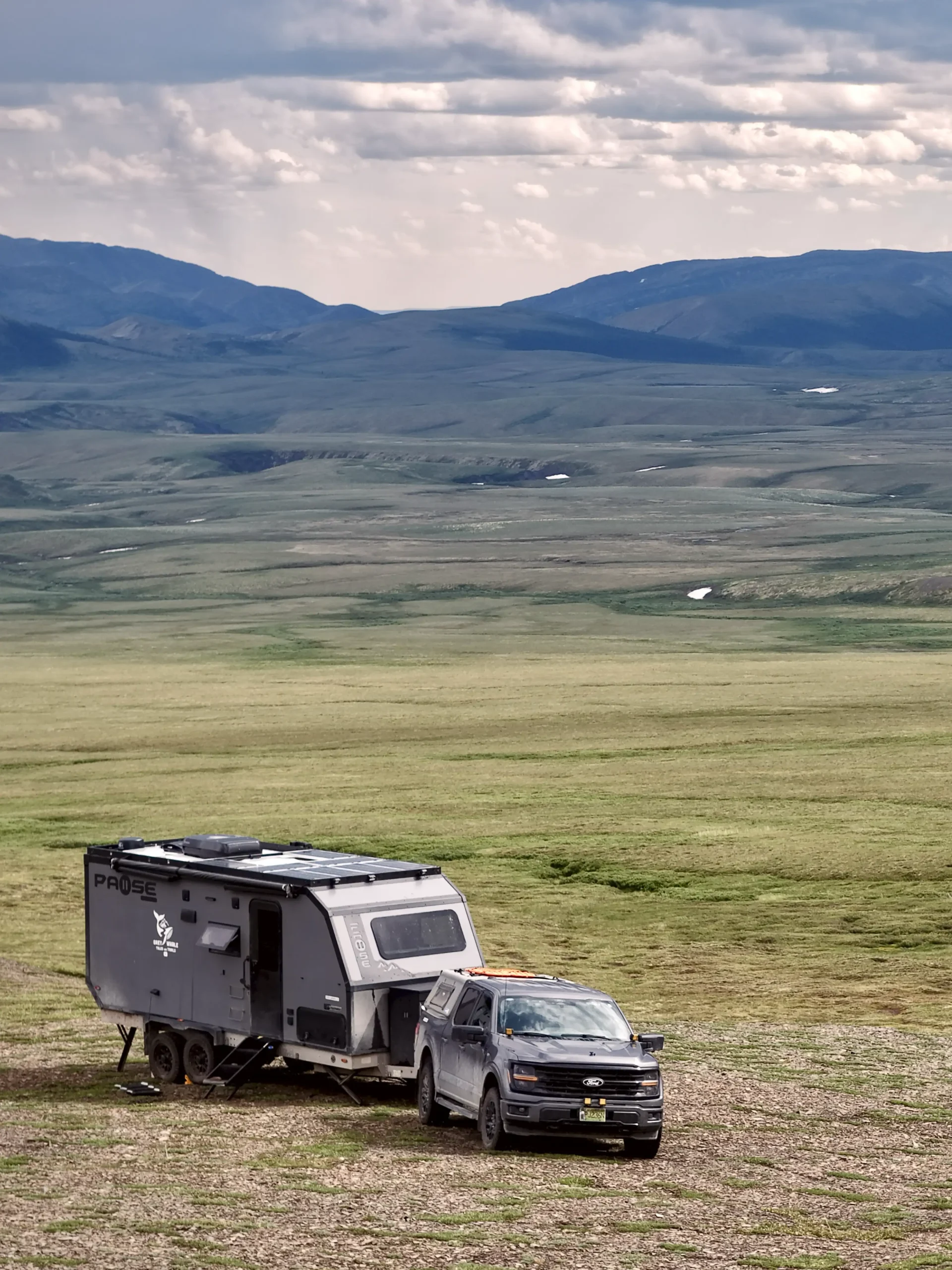
Now, Which Platform Is Right for You?
Understanding what goes into the price is only part of the decision.
Restart, Reboot and PAUSE offer different levels of construction, suspension, off-grid systems, standard equipment and customization.