
Pause vs Reboot vs Restart Travel Trailers: In-Depth Comparison
Pause, Reboot and Restart belong to the same family of overland travel trailers, but they are not simply three versions of one product with different finishes and prices.
All three are built for overland travel. Each combines independent suspension, substantial ground clearance, composite construction and equipment intended to support travel beyond paved roads and serviced campsites. What changes from one lineup to another is the extent of that capability: the chassis beneath the trailer, suspension travel and adjustment, underbody protection, off-grid power, thermal systems, water capacity, controls, interior construction and the amount of equipment integrated at the factory.
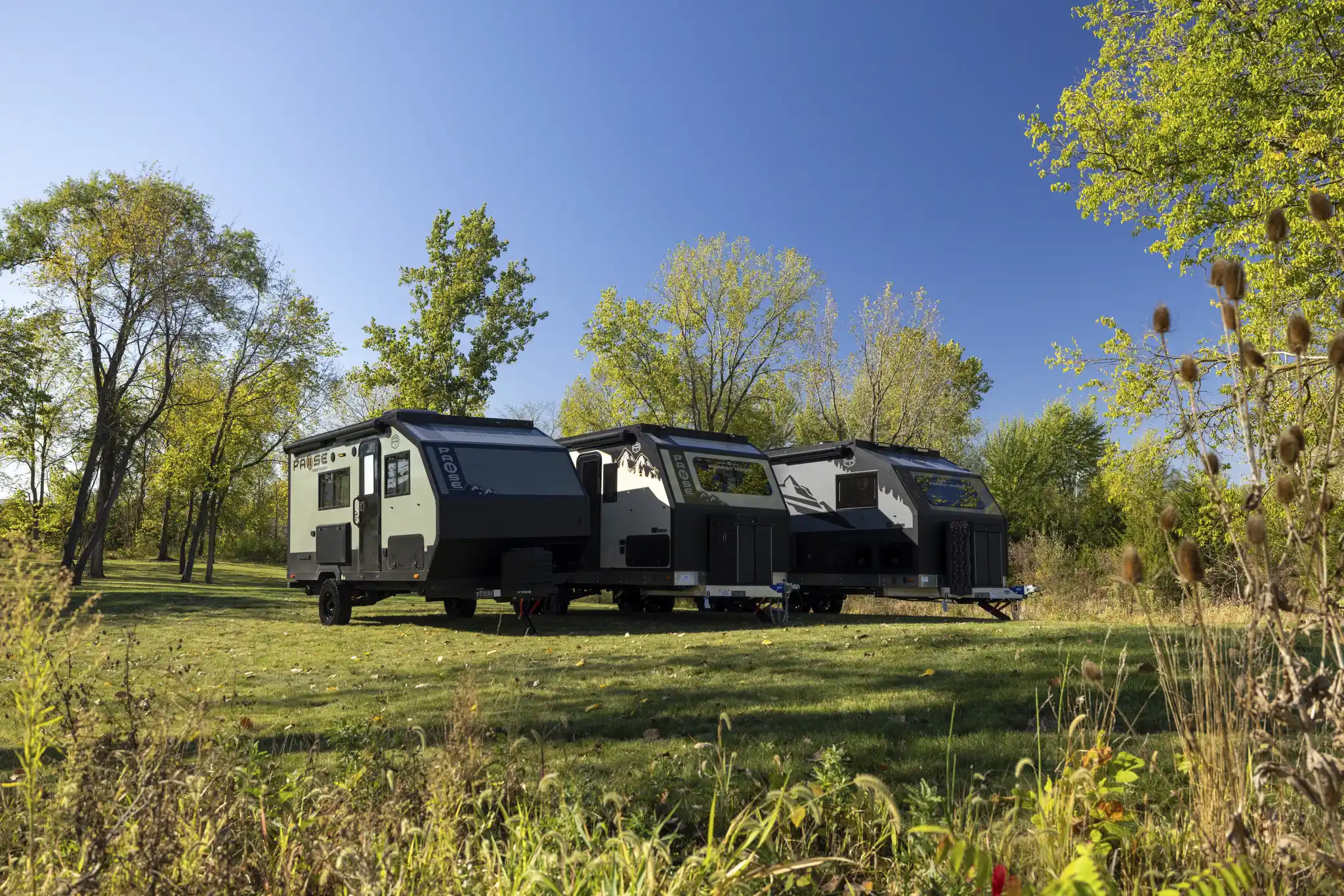
Restart concentrates the essential engineering into a lighter and more attainable package. Reboot adds a huck-riveted aluminum chassis, an articulating hitch, a stronger standard electrical platform, greater underbody protection and extensive upgrade paths. Pause brings the broadest collection of advanced systems together as standard equipment, while the established 16.4, 20.3 and 21.4 models also use a fundamentally different full-TransCore body construction.
In this guide, we will look at those differences section by section, beginning with the chassis and finishing with the interior, equipment and available options.
Model-year note: Palomino has introduced changes for newer production, particularly in battery packages, floorplans and certain components. Those changes are identified separately where relevant, and the specifications of an individual trailer should always be confirmed before purchase.
The Lineup at a Glance
Restart: The Core
Restart was introduced as a lighter and more attainable way into the Pause family, but it is not a conventional travel trailer dressed in off-road graphics.
Its foundation includes a six-inch steel-tube chassis with two-stage corrosion protection, CURT independent suspension, off-road tires, high ground clearance, the same five-layer laminated wall construction and aluminum-framed fiberglass roof used by Reboot, tank heating pads and a non-wood Supersede Marine Board floor.
Restart controls weight and price through simpler choices elsewhere. It uses a conventional ball coupler, a woven-foil underbelly, square glass windows and a more conventional interior. Its Victron Energy system, along with lithium batteries, is optional rather than standard.
This creates a genuine overland foundation without requiring every buyer to pay for the most expensive suspension, electrical and climate systems. Restart can remain relatively straightforward, or it can be equipped with lithium power, an exterior kitchen, additional storage and other practical upgrades.
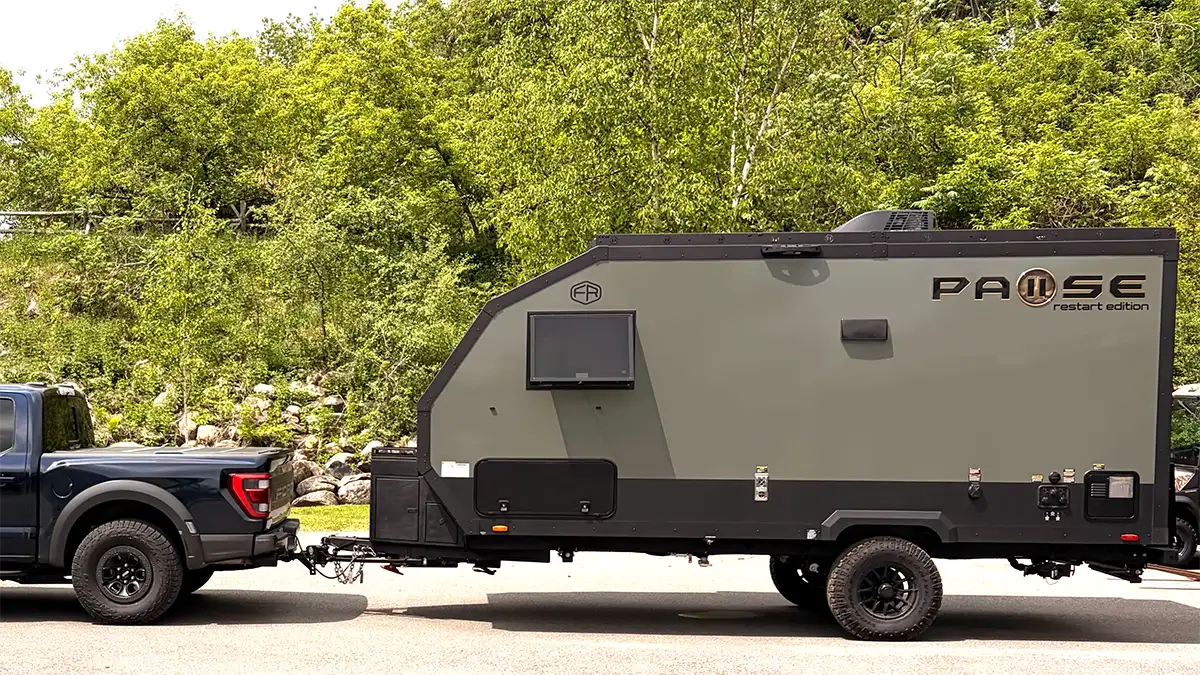
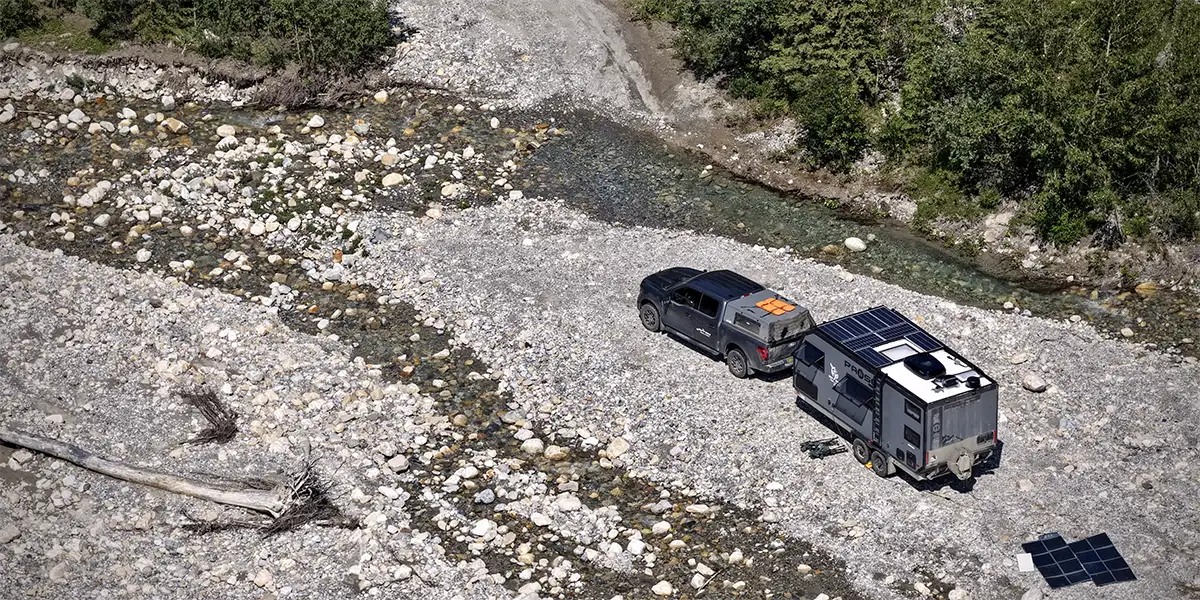
Reboot: Advanced Capability with Extensive Flexibility
Reboot takes a major step forward in chassis construction, towing articulation, underbody protection, standard electrical equipment, window design and available suspension technology.
The line uses a MORryde huck-riveted aluminum chassis, independent shear-spring suspension, a fully articulating hitch, a puncture-resistant aluminum underbelly, a TransCore composite floor, Piuma dual-pane acrylic windows and a standard Victron-based electrical system.
On the 17.4, 19.4 and 19.6, buyers can move considerably further through options such as MORryde air suspension, larger battery and solar packages, Truma climate equipment, solid-surface countertops and outdoor kitchens. A Reboot ordered with air suspension, the Truma package and maximum electrical upgrades becomes a highly integrated overland platform in its own right and can approach Pause in several important areas.
Reboot is therefore more than a simple middle step. It offers serious capability, substantial carrying capacity, multiple couple and family floorplans and an unusually wide range of factory configurations.
Pause: The Most Complete Factory Integration
Pause is the flagship expression of the platform.
Its defining advantage is not one isolated component. It is the breadth of equipment brought together from the outset: huck-riveted aluminum chassis construction, MORryde air suspension, substantial solar and lithium capacity, Truma climate systems, aluminum cabinetry, Garmin controls, a heated and protected underbody, larger propane and water reserves and extensive exterior equipment.
The established Pause 16.4, 20.3 and 21.4 go further structurally by using TransCore throughout the walls, roof and floor. This creates a fully composite, no-wood body envelope rather than an aluminum-framed laminated body.
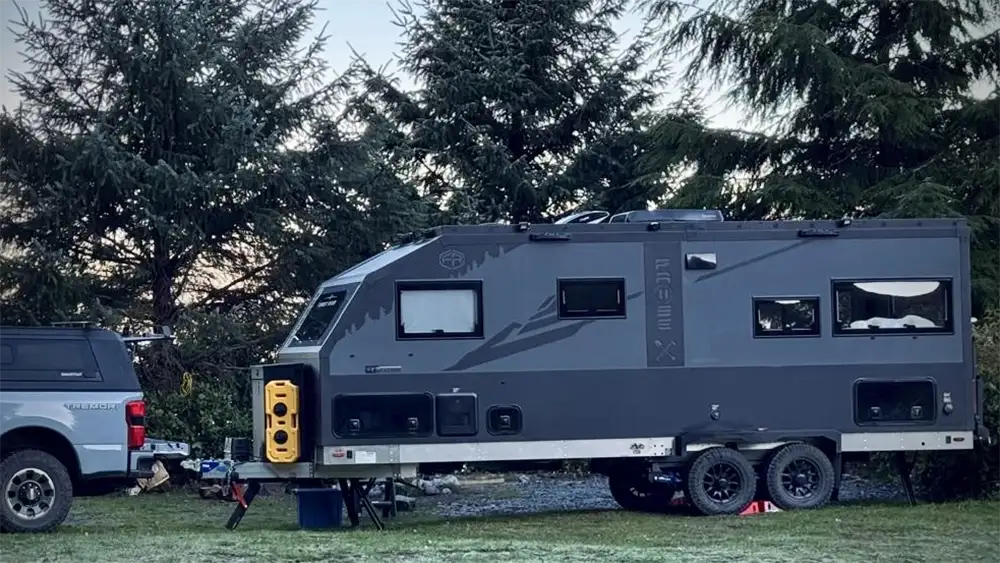
The Pause X follows a different construction concept. Its envelope is built like Reboot, while its Pause identity comes from the equipment and integration built around that body, including standard air suspension, aluminum cabinetry, a much larger interior, separate bathroom and shower spaces, two Truma furnaces, substantial power capacity and an available integrated propane generator.
These trailers don’t trade ordinary travel-trailer usability for capability. The same engineering that supports remote travel also improves highway ride control, levelling on uneven sites, electrical independence, climate management and long-term durability.
1. Chassis and Frame
Restart: Double-Coated Steel
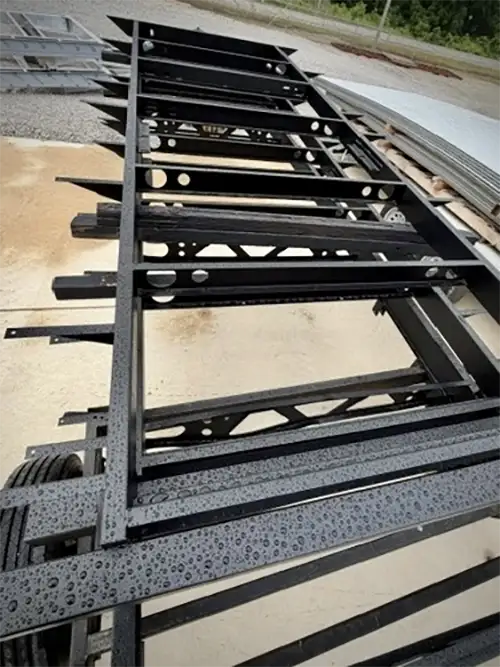
Restart uses an e-coated and powder-coated six-inch steel-tube chassis.
The double coating is important. E-coating applies a corrosion-resistant primer across the steel before the powder-coated exterior finish is added. The two layers provide more complete protection than a frame that receives only an exposed surface coating.
Steel offers high strength, familiar fabrication and broad repairability. It also helps Restart reach a lower price than the huck-riveted aluminum platform used by Reboot and Pause. Restart therefore reaches real overland capability through a robust but more cost-conscious structural solution. Its frame is simpler than the MORryde aluminum chassis, but it is not the lightly protected open-channel frame commonly found beneath entry-level travel trailers.
Reboot: Huck-Riveted Aluminum
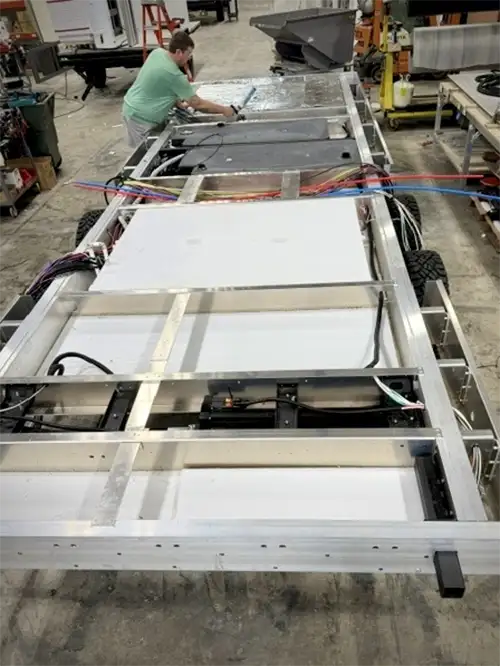
Reboot uses a MORryde huck-riveted full-perimeter aluminum chassis.
The structural members are mechanically joined rather than assembled as a conventional welded steel frame. Huck fastening creates consistent, high-clamping-force connections without applying welding heat to every joint.
Aluminum also avoids the broad rust concerns associated with exposed steel, an advantage for trailers that may encounter mud, snow, road salt, coastal moisture and long periods outdoors.
Pause: The Same Advanced Frame, More Equipment from the Start
2. Suspension, Ride Control and Levelling
Restart: CURT Independent Suspension
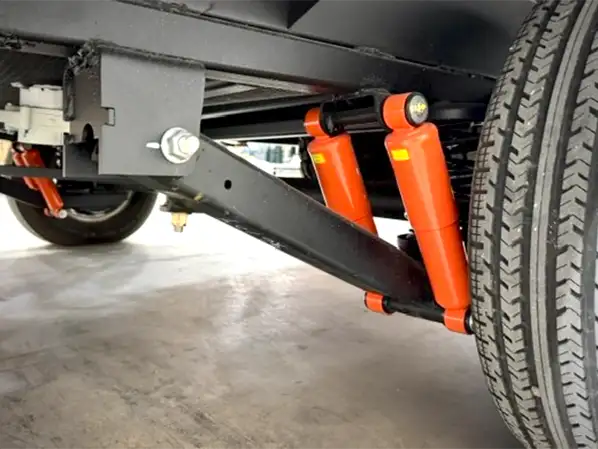
Restart uses CURT independent suspension.
Each wheel can respond to terrain without being tied to the opposite wheel by a conventional solid axle. That allows the trailer to maintain better wheel movement over uneven surfaces and avoids transferring every one-sided impact directly across an axle.
This gives Restart genuine rough-road ability and separates it from many similarly priced travel trailers that still rely on conventional leaf-spring axle arrangements.
Reboot: Shear-Spring Standard, Air Ride Available
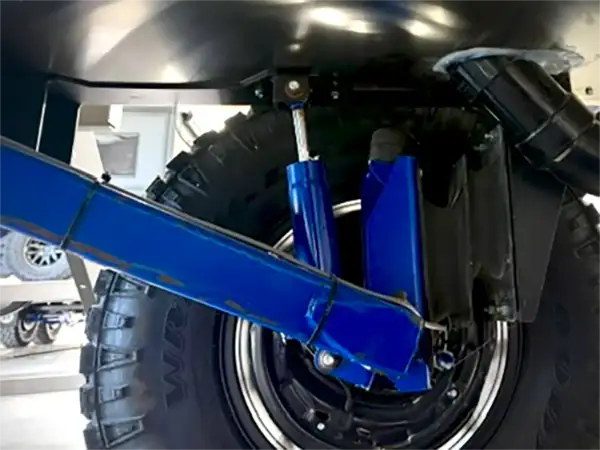
The established Reboot configuration uses MORryde independent rubber shear-spring suspension with shock absorbers as standard.
This is a robust mechanical system that does not require airbags, electronic height control or an onboard compressor. It provides up to six inches of suspension travel, depending on configuration, while maintaining the simplicity of a passive system.
MORryde independent air suspension has been available on the Reboot 17.4, 19.4 and 19.6. The compact 14.3 remains a shear-spring platform. Air-ride configurations add airbags, shocks, an onboard compressor and adjustable ride-height functions, with up to 12 inches of suspension travel on applicable models.
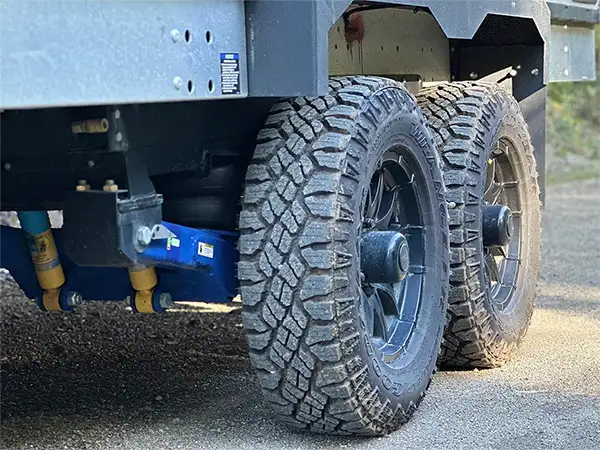
- Ride height can be adjusted for changing road conditions.
- Additional suspension travel helps the wheels follow deeply uneven terrain.
- The trailer can compensate for an uneven campsite.
- Levelling can be accomplished without depending entirely on blocks.
- The air springs help isolate the body, cabinetry and appliances from repeated impacts.
- Ground clearance can be managed more deliberately at steep transitions or over obstacles.
Demonstration of leveling a Reboot 19.6 trailer with MORryde air suspension
These advantages are relevant long before a route becomes an extreme trail. Washboard, potholes, rutted forestry roads, frost heaves, steep driveway transitions and poorly levelled campsites all reveal the difference between a basic axle system and a controlled independent suspension.
Pause: Air Suspension as Standard
3. Hitch, Tongue and Towing Interface
Restart
Restart uses a conventional 2 5/16-inch ball coupler.
It is familiar, widely compatible and easy to service. A ball coupler still permits angular movement, but its articulation is more limited when the tow vehicle and trailer are simultaneously pitched, rolled or angled on uneven terrain.
This is one of the deliberate areas where Restart uses a simpler and less expensive solution.
Reboot & Pause
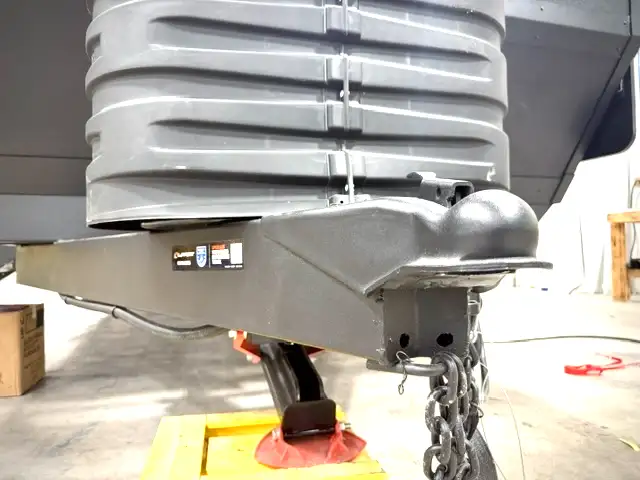
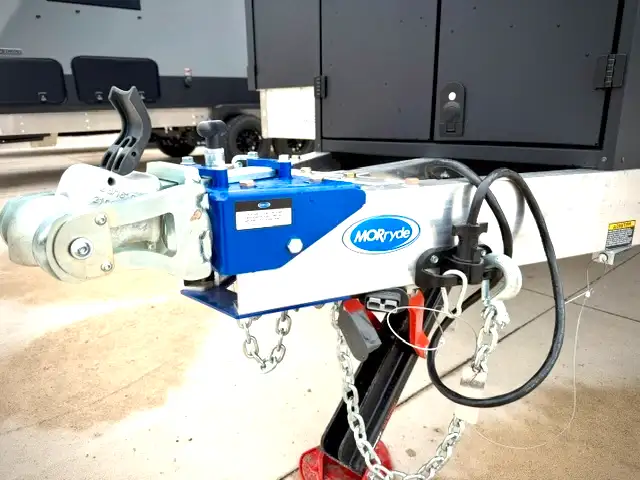
Pause and Reboot use a fully articulating ball-coupler system by MORryde.
The added range of movement allows the truck and trailer to move more independently on rutted roads, sharply sloped approaches and uneven campsites. It reduces the degree to which the hitch becomes the limiting point when one vehicle is angled differently from the other.
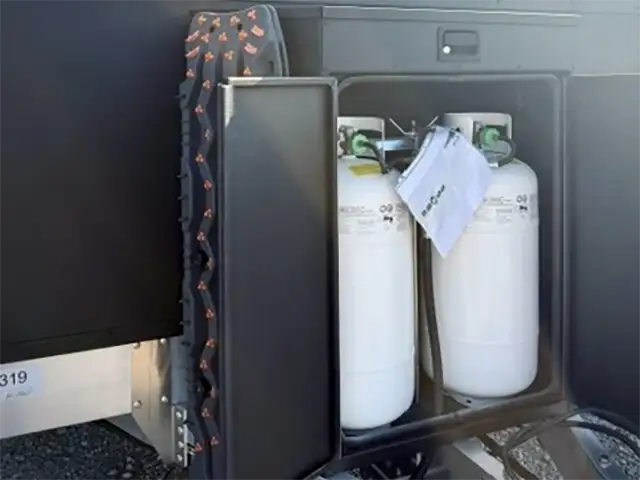
Both lines also use substantial coated aluminum A-frame storage, offering solid protection for the propane tanks. Reboot commonly carries two 20-pound propane tanks inside a metal front storage box. Established Pause models generally use two 30-pound tanks, with 40-pound tanks available on certain Pause X generator configurations.
Towability Depends on the Model, Not Only the Lineup
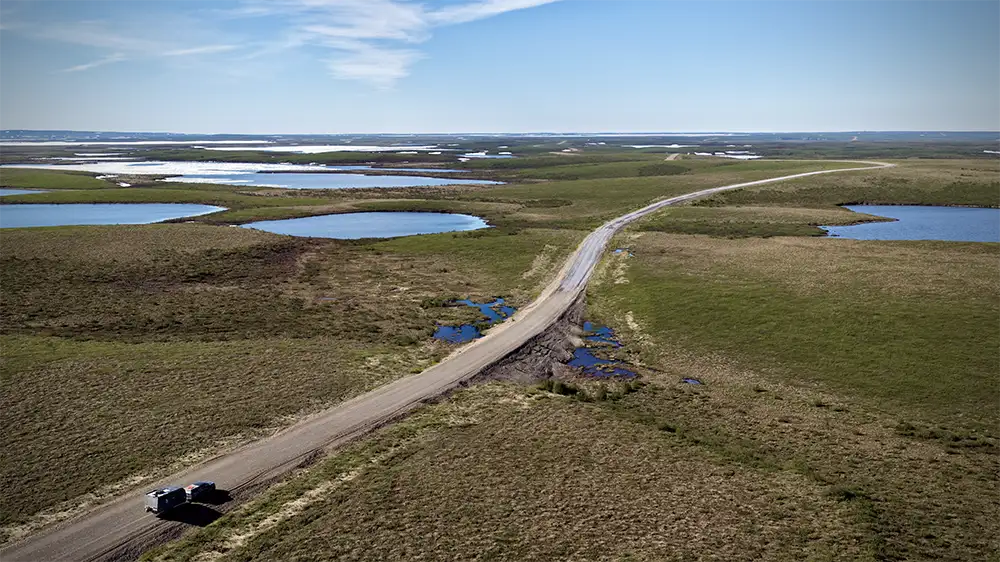
The family name does not determine whether a trailer is suitable for a particular tow vehicle. A compact Restart or Reboot may work with some properly equipped SUVs and light-duty trucks. Larger Reboot and Pause models demand considerably more payload, towing capacity and stability.
For example, Reboot 14.3 specifications list an unloaded vehicle weight of 4,583 pounds and a hitch weight of 630 pounds, while Restart R17RB is listed at 4,748 pounds with a 685-pound hitch weight. At the other end of the range, the established Pause 21.4 is listed at 7,909 pounds unloaded with a 1,170-pound hitch weight.
4. Floor and Underbody
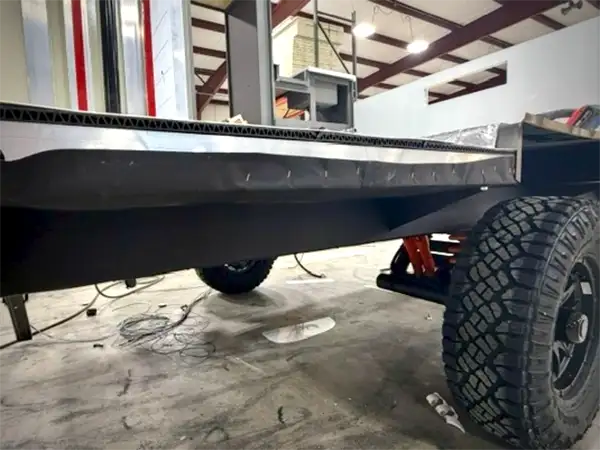
Restart: Aluminum Frame with Supersede Marine Board
Restart uses an aluminum-framed floor topped with 5/8-inch tongue-and-groove Supersede Marine Board.
Supersede is a structural sheet made from recycled plastic as a direct alternative to plywood. It is waterproof, rot- and mould-resistant, splinter-free and designed to retain fasteners while being cut and installed with familiar woodworking methods. This means Restart does not rely on plywood or OSB floor decking and does not carry the same floor-rot risk after water exposure.
Beneath the Restart floor is a black woven-foil underbelly enclosure. Heating pads are fitted to the fresh, grey and black tanks.
Reboot & Pause: The Same TransCore Floor
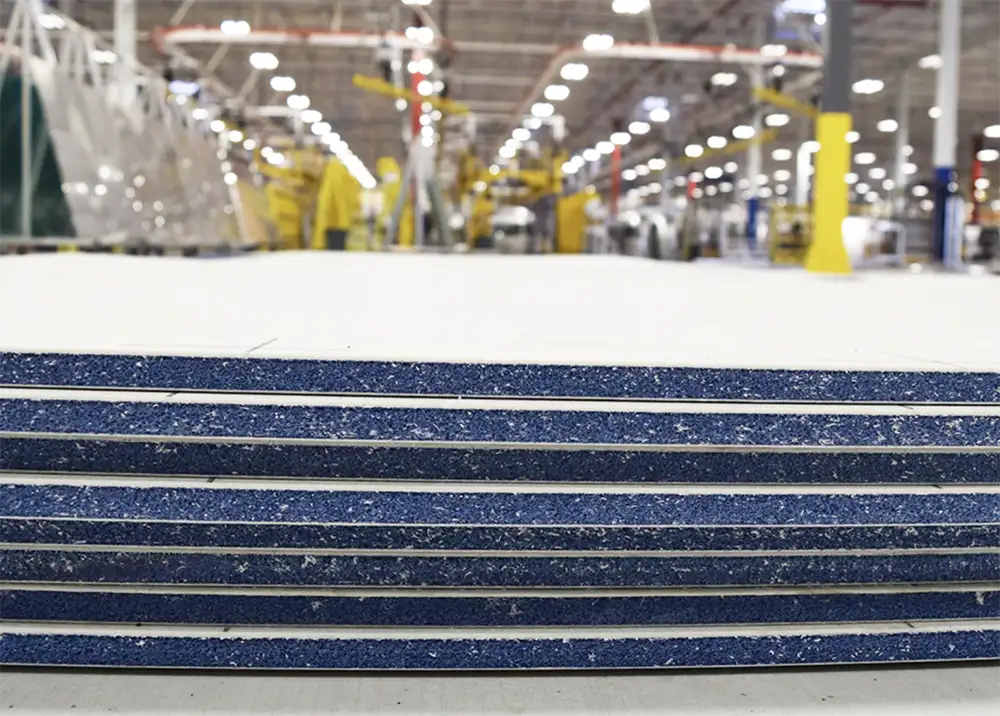
Reboot and Pause use the same TransCore composite floor. TransCore is a lightweight, abrasion- and puncture-resistant engineered thermoplastic composite seamless panel that is 100% waterproof, anti-microbial and anti-fungal, with excellent insulation, no rot or mildew, insect resistance and impact resistance.
5. Walls and Structural Body
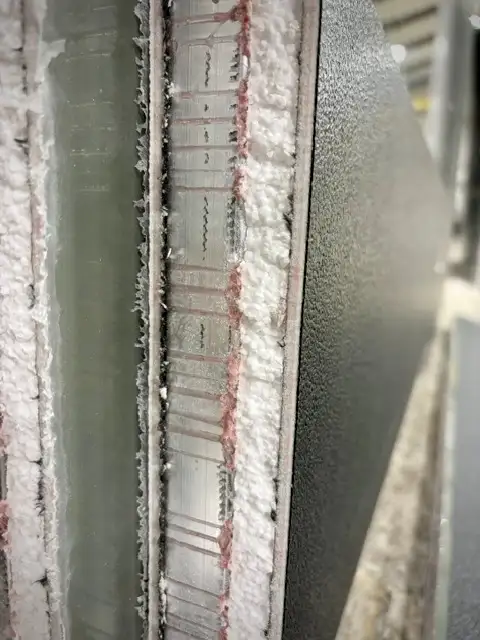
Restart & Reboot: The Same Five-Layer Wall Construction
- Exterior fiberglass
- Azdel composite backing
- EPS insulation core
- A second Azdel composite layer
- Interior fiberglass finish
The aluminum frame forms the underlying skeleton. The laminated fiberglass, Azdel and EPS layers create a stiff insulated panel around it.
Azdel replaces the luan plywood often used as a backing layer in laminated RV walls. It does not absorb moisture in the same manner as luan and is not subject to the same swelling and decay. The EPS core provides insulation while helping the bonded assembly maintain its shape and stiffness.
This is a substantial wall system.
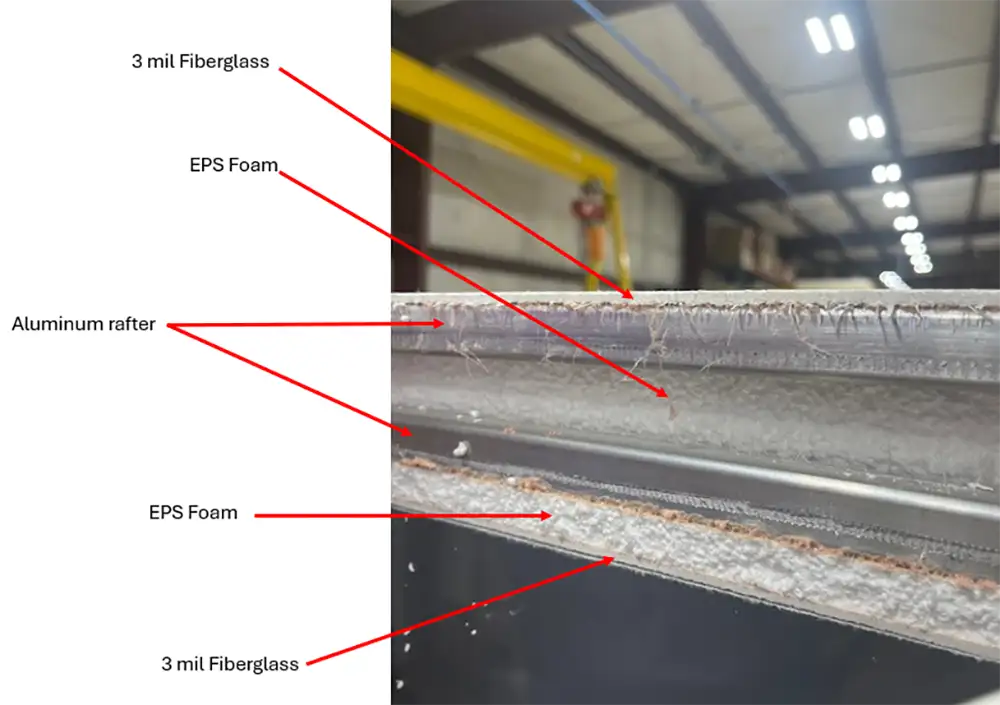
Pause: A Full TransCore Envelope
The established Pause 16.4, 20.3 and 21.4 use TransCore across the walls, floor and roof.
Rather than placing laminated panels over a separate aluminum wall skeleton, the fused skins and thermoplastic core form a structural composite shell. The outer skins carry tension and compression while the core maintains their separation and transfers load through the panel.
Pause X is the exception within the Pause line. Its body envelope is constructed like Restart and Reboot, with the same five-layer laminated walls and aluminum-framed laminated roof, while retaining the TransCore floor.
6. Roof Construction
Restart, Reboot and Pause X
Restart, every Reboot model and Pause X use the same basic roof construction: a seamless laminated fiberglass radius roof supported by aluminum framing or trusses, with an EPS insulation core and no structural wood.
The curved profile improves water runoff and creates room for a thicker central insulation section. The continuous fiberglass exterior avoids the broad rubber or membrane field used on many travel trailers.
Pause 16.4, 20.3 and 21.4
7. Exterior Protection, Clearance & Suspension Travel
All three lineups provide roughly 25 inches of ground clearance on applicable configurations. Ground clearance alone, however, does not tell the complete story.
The more meaningful differences are suspension travel, the ability to change ride height, underbody construction and the placement or protection of vulnerable components. A fixed-height trailer with 25 inches of clearance does not respond to terrain in the same way as an air-suspension trailer with up to 12 inches of wheel travel.
Restart
Restart combines high ground clearance, CURT independent suspension, off-road tires and a rugged laminated body with a woven-foil underbelly and rear-wall-mounted spare.
Reboot
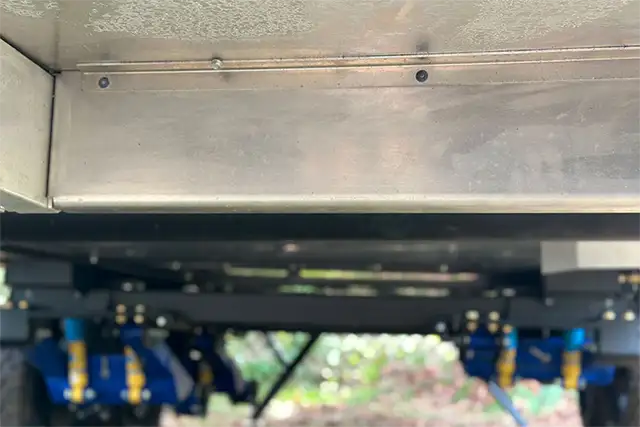
Reboot adds a puncture-resistant aluminum underbelly, a fully articulating hitch, metal A-frame storage, off-road bumper and tire carrier, rear receiver points and independent shear-spring suspension with up to six inches of travel.
Pause
Pause combines air suspension, adjustable ride height, puncture-resistant underbody protection, polyurea-coated front surfaces on applicable models and substantial rear bumper or storage systems.
Established configurations include swinging spare-tire carriers and accessory receiver points, allowing equipment to be carried on structural mounts rather than light-duty rear-wall attachments. Pause X 22.4 can also feature an outside deck and bike carrier.
8. Windows, Doors and Exterior Openings
Restart
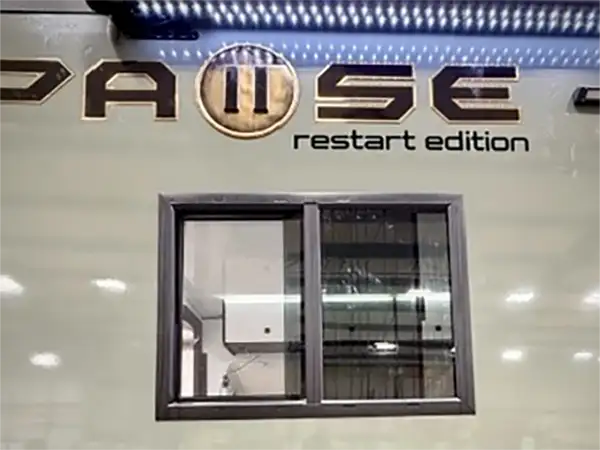
Restart uses modern square glass windows.
They provide a familiar window format and help control the overall cost of the trailer. Their thermal and condensation performance should not be assumed to match the dual-pane acrylic windows fitted to Reboot and Pause.
Reboot & Pause
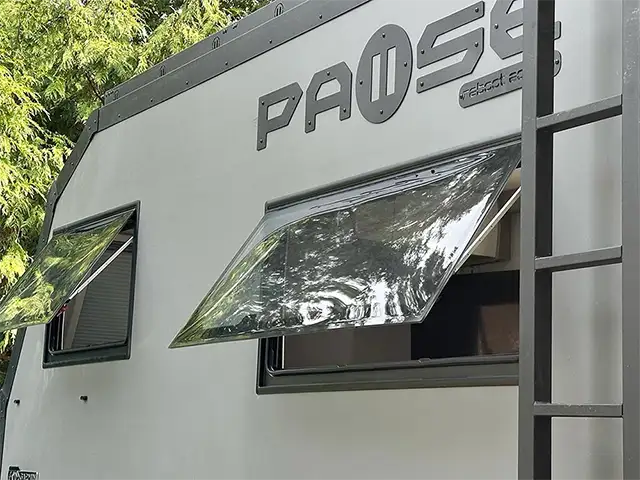
Reboot and Pause use Piuma dual-pane acrylic windows with integrated blinds and screens.
Acrylic is lighter than glass, resists shattering and reduces heat transfer compared with many single-pane RV windows. The integrated blind-and-screen cassette avoids separate hanging coverings, and the outward-opening design allows ventilation during light rain.
9. Insulation and Multi-Season Design
“Four-season” is often used as a marketing label, but winter is not one fixed condition. A mild Vancouver Island winter and severe cold in the Northwest Territories cannot be treated as the same test.
No trailer remains winter-proof at every temperature without limits. As temperatures fall, furnace duty cycles rise, propane and battery use increases, exposed outlets become more vulnerable and condensation becomes harder to control. At some point, skirting, additional insulation, heat management or other modifications may be required.
For that reason, ‘multi-season’ is the more honest term. The practical questions are:
- How are the walls, roof and floor constructed and insulated?
- Are the tanks enclosed and directly heated?
- Is furnace air circulated through the underbody?
- How much furnace output is available?
- How well do the windows resist heat transfer?
- How much battery and propane capacity can support the climate systems?
- How is moisture removed from an occupied interior?
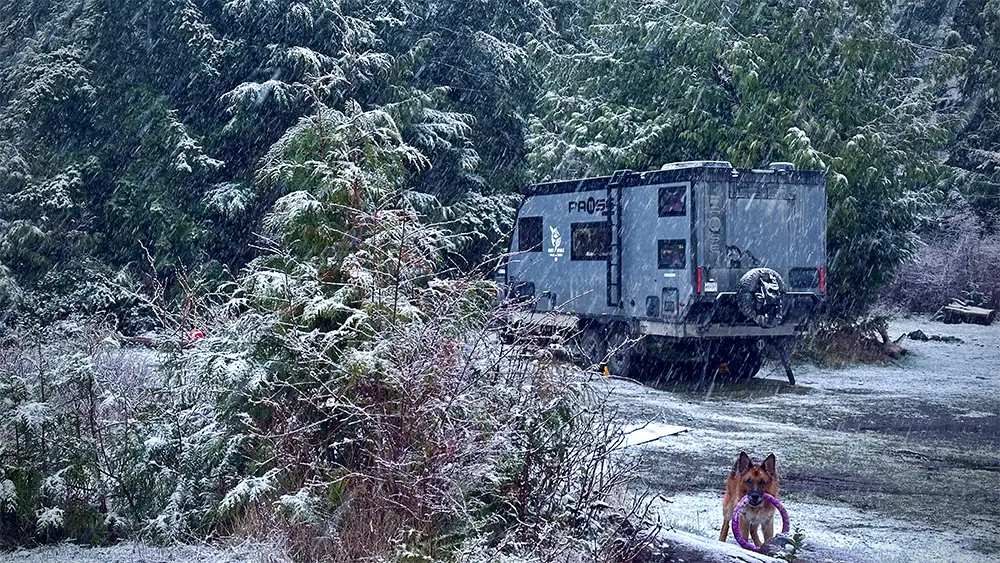
Restart
Restart uses the same insulated laminated walls and roof as Reboot, a non-wood floor, a Suburban blow-through furnace and 12-volt heating pads on the fresh, grey and black tanks.
This is a real multi-season foundation. Its limits are defined by the simpler glass windows, conventional six-gallon water heater and smaller energy platform. It can extend travel well beyond summer, but it should not be assigned the same prolonged-cold-weather expectation as a Reboot equipped with the winter package or a Pause.
The standard Furrion Chill Cube air conditioner includes heat-pump capability. A heat pump can provide efficient electric heat in moderate temperatures, but its output declines as outside temperatures fall and it requires a substantial 120-volt power source.
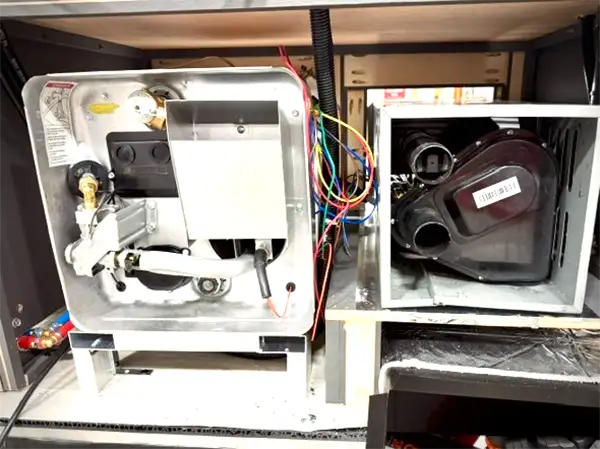
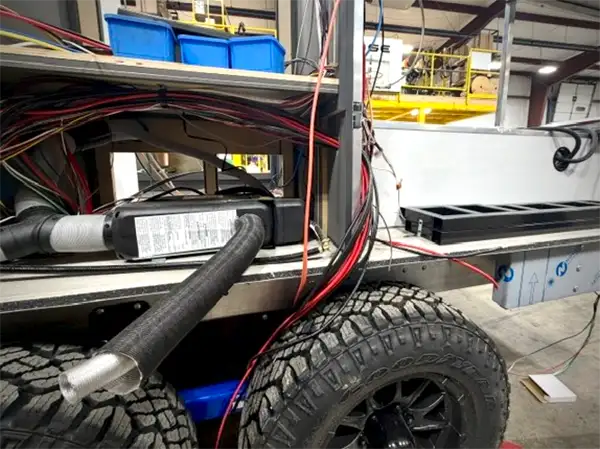
Reboot
Reboot combines the same thick laminated walls and roof with a TransCore floor, dual-pane windows, puncture-resistant enclosed underbelly and tank heating pads.
The base stock configuration uses conventional Suburban heating and water-heating equipment. On the 17.4, 19.4 and 19.6, the Truma and winter package upgrades the trailer with a Truma VarioHeat furnace, Truma AquaGo on-demand water heater, Truma Aventa air conditioner, MaxxAir ventilation and forced-air heating within the protected underbody.
A Truma-equipped Reboot 19.6 can realistically remain comfortable around -10°C to -15°C under many ordinary winter conditions. Wind, humidity, propane supply, door use, solar recovery and the condition of exposed drains can change that result significantly. Below that range, furnace operation becomes more continuous and additional winter measures may be necessary.
Pause
Pause combines dual-pane windows, heated tanks, forced-air underbody heating, standard Truma equipment, a larger standard battery bank, more solar generation and larger propane reserves on many models.
The full-TransCore body of the 16.4, 20.3 and 21.4 adds another structural and thermal advantage. Pause X uses the Reboot-style laminated envelope, but compensates for its greater interior volume with two 11,500 BTU Truma VarioHeat furnaces, providing approximately 23,000 BTU of combined output.
The second furnace is not simply about achieving a higher thermostat setting. It improves heat distribution through a much larger floorplan and provides more capacity when exterior conditions increase heat loss.
10. Water and Plumbing Systems
Water capacity is one of the clearest limits on off-grid travel. It also consumes payload quickly: one litre of water weighs one kilogram before the tank, pump and plumbing are considered.
Factory specifications are normally published in U.S. gallons. The capacities below are converted to litres for Canadian readers.
Restart
Reboot
The Reboot 14.3 carries 129 litres of fresh water, 114 litres of grey water, and 114 litres of black water. The larger established Reboot 17.4, 19.4 and 19.6 models carry 246 litres of fresh water, 114 litres of grey water, and 114 litres of black water. This gives the larger Reboots a substantial fresh-water reserve without moving to the full size and delivered weight of the largest Pause models.
Pause
The established Pause 16.4 carries 204 litres of fresh water. The Pause 20.3, 21.4 and Pause X carry 288 litres. Grey- and black-water capacity is 114 litres each on these models.
Pause therefore provides the largest fresh-water reserve in the lineup. A full 288-litre tank adds approximately 288 kilograms, or 635 pounds, before any other cargo is loaded. That reserve is valuable off-grid, but it must be included in both trailer payload and tow-vehicle calculations.
*Toilets and Alternative Waste Systems
The trailers are delivered with conventional RV toilets and black tanks. Many owners who spend extended periods off-grid replace the stock toilet with an alternative waste system. Examples include a Separett separating waterless toilet or a Laveo dry-flush toilet. These systems manage waste differently, reduce or eliminate toilet water use and can delay the point at which black-water capacity forces the trailer to return to a dump station. The best choice depends on how the owner wants to handle ventilation, consumables, waste disposal and the existing black tank, but the factory toilet is not the only practical configuration for overland use.
**Note: these changes are not available at the factory level
11. Electrical Architecture
Solar wattage receives the most attention, but it represents only one part of an off-grid electrical system. A complete system must generate, store, replenish, convert, distribute and monitor power.
The relevant components include:
- Solar generation
- Lithium storage
- Solar and shore-power charging
- Tow-vehicle charging
- DC-to-AC conversion
- 12-volt and 120-volt distribution
- Monitoring and control
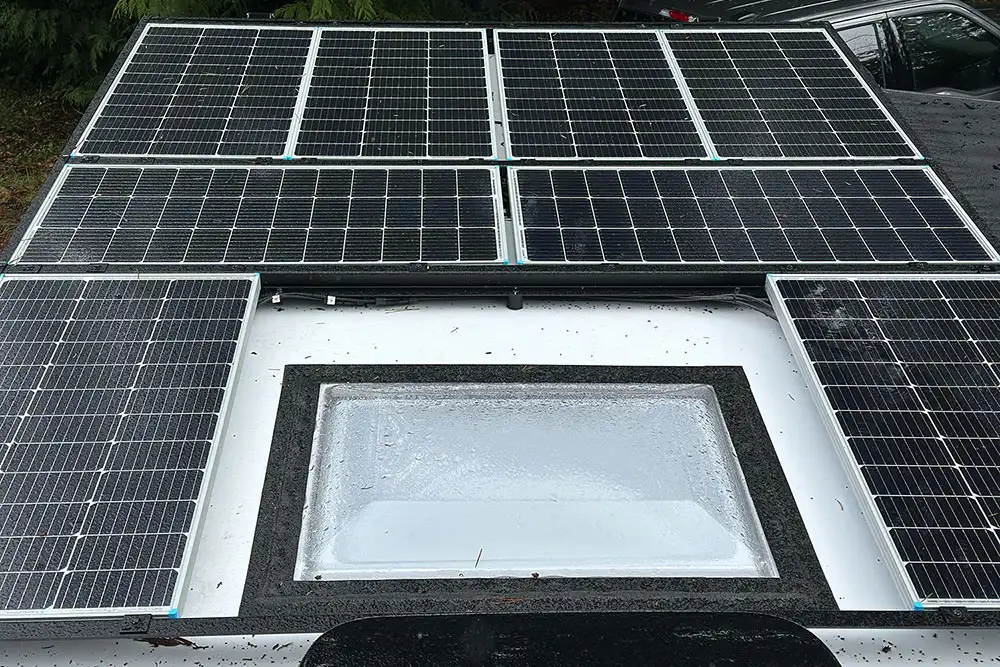
Restart
Restart makes the Victron electrical system optional.
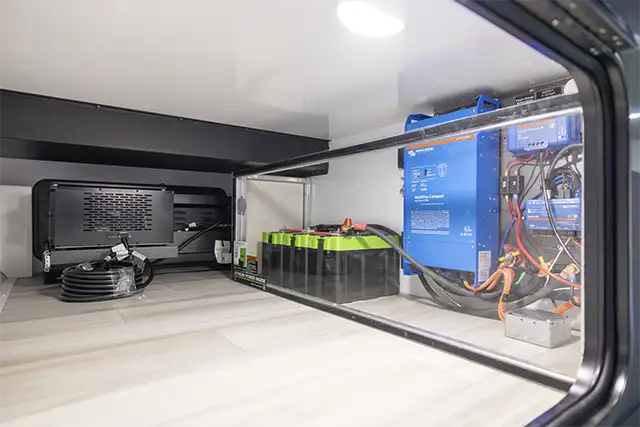
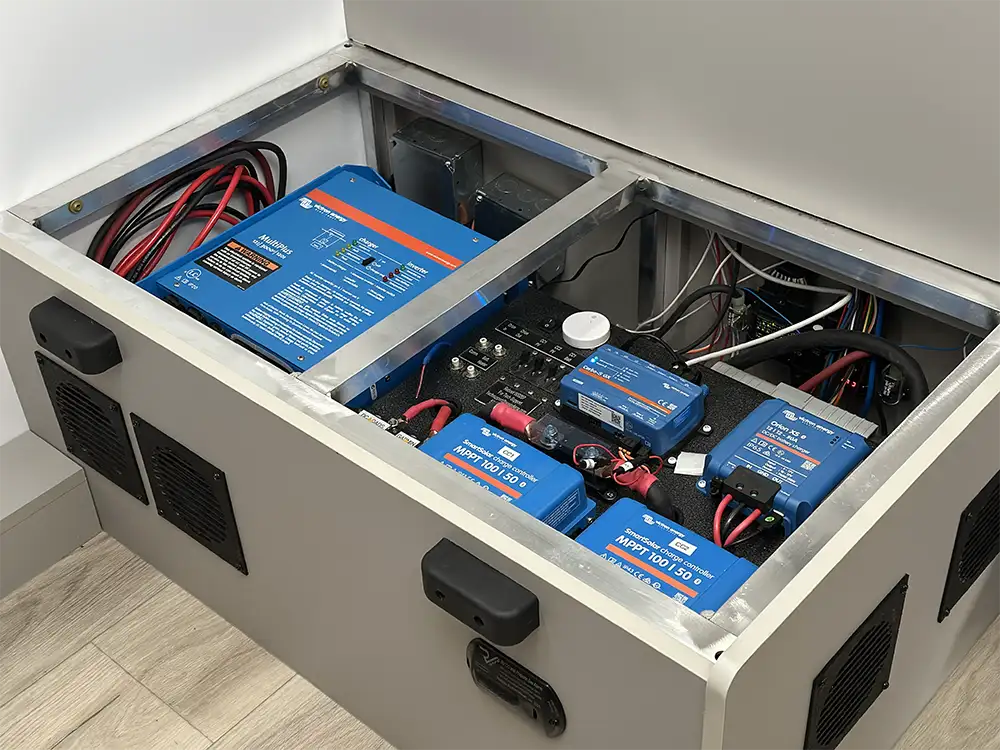
The available package includes: 200 watts of roof solar, 306Ah Expion360 lithium battery, Victron 2,000W, MultiPlus inverter/charger, Victron MPPT solar controller, and Victron GX touchscreen monitoring and control.
This is a meaningful electrical system for a trailer of Restart’s size. The 2,000W inverter makes many 120-volt appliances available away from shore power, while the lithium battery offers far more usable energy than a conventional lead-acid setup.
The buyer can also omit the package if the trailer will be used differently. That lowers the initial price but leaves the trailer more dependent on basic 12-volt storage, shore power or a separate charging solution.
Reboot
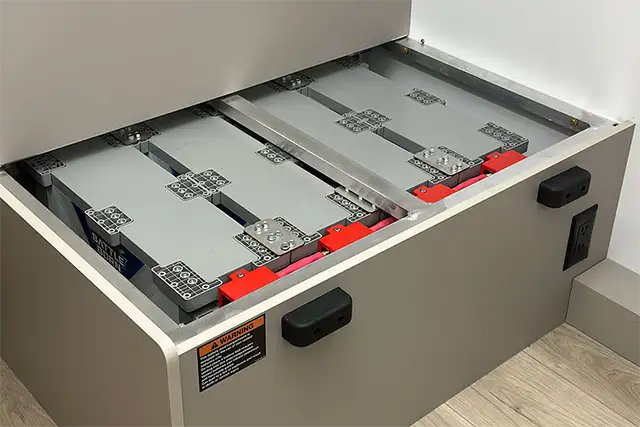
Available upgrades increase the system to 540Ah with 1,000 watts of total solar, or as much as 1,080Ah and up to 1,600 watts of total solar, depending on the model and package. The total may combine permanently mounted roof panels with portable panels or solar blankets.
The 3,000W inverter is important because it can support substantial 120-volt loads from the battery bank. It does not make stored energy unlimited: runtime still depends on battery capacity, appliance demand, ambient temperature and how quickly solar, shore power or the tow vehicle can replenish what was used.
Pause
Pause X 22.4 includes 1,000 watts of roof solar and 540Ah lithium as standard, with an upgrade path to 1,800 total watts and 1,080Ah.
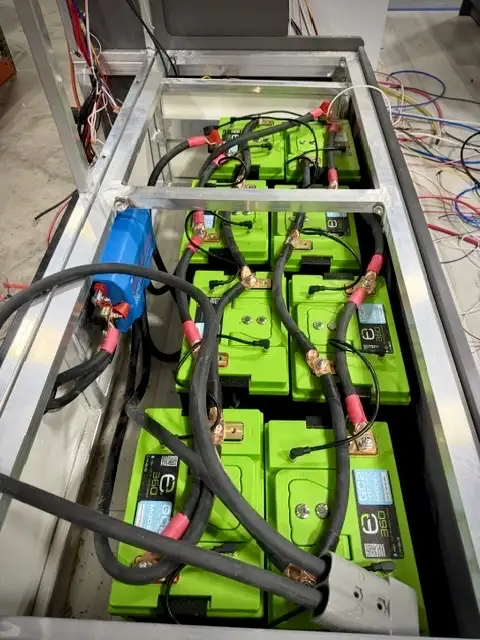
*Newer-production change:
The 2027 Reboot/Pause/Restart lineups use Expion360 batteries.
12. Propane, Heating, Cooling and Ventilation
Restart
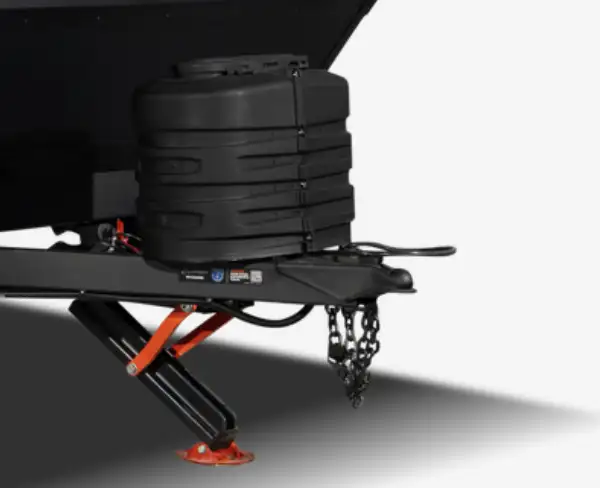
Restart carries two 20-pound propane tanks beneath an ABS cover. ABS stands for acrylonitrile butadiene styrene, a durable moulded thermoplastic. The cover shields the cylinders and regulator from weather, road spray and debris while remaining light and easy to remove. It is a protective enclosure rather than the structural metal storage box used on Reboot and Pause.
Restart uses a Suburban blow-through furnace, a six-gallon gas/electric water heater and a Furrion Chill Cube 18,000 BTU air conditioner with heat-pump capability.
The heat pump can reduce propane use in mild weather when adequate 120-volt power is available.
Reboot
The established Reboot carries two 20-pound propane tanks inside a metal A-frame storage box.
Base stock configurations use a Suburban furnace, conventional water heater and standard air conditioner. The Truma and winter package available on the 17.4, 19.4 and 19.6 changes the climate system to:
- Truma VarioHeat furnace
- Truma AquaGo on-demand water heater
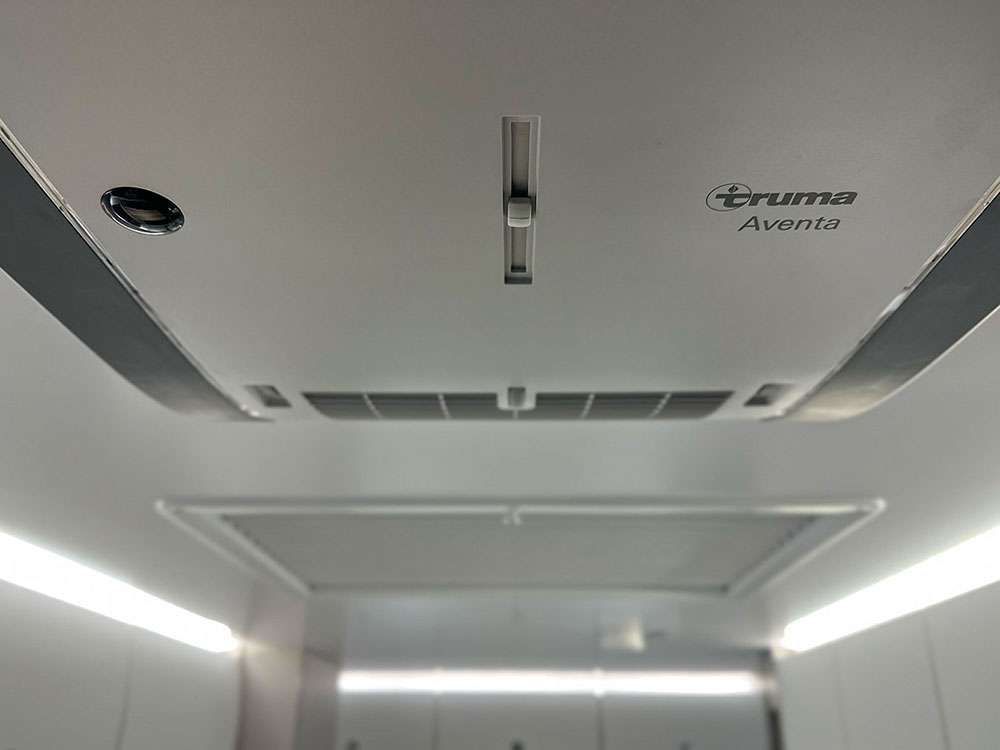
- Truma Aventa air conditioner
- MaxxAir Deluxe ventilation
- Forced-air heating in the enclosed underbody
Pause
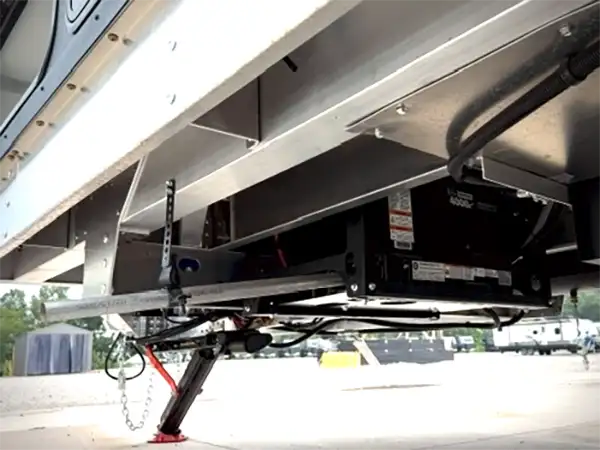
Pause includes the Truma climate package as standard.
Pause X 22.4 and Pause X 24.4 add two VarioHeat furnaces and can be equipped with an integrated propane generator and use larger 40-pound propane tanks.
13. Appliances and Galley
Restart
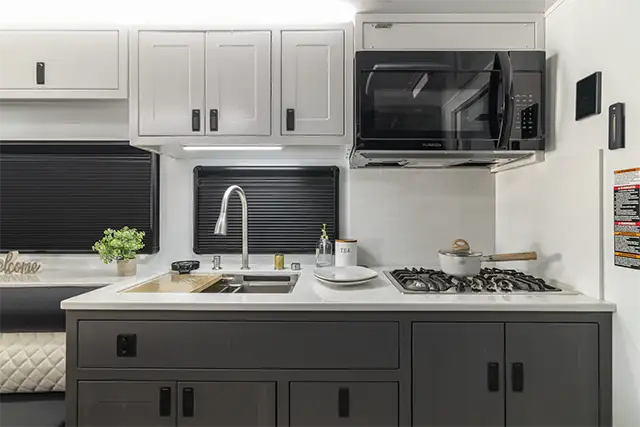
Restart includes a two-burner gas cooktop, 10.6-cubic-foot black-glass 12-volt refrigerator/freezer, sink and an under-counter air-fryer/convection microwave. Thermo-foiled countertops and engineered wood cabinetry provide a complete galley without the weight and manufacturing cost of Pause’s aluminum interior.
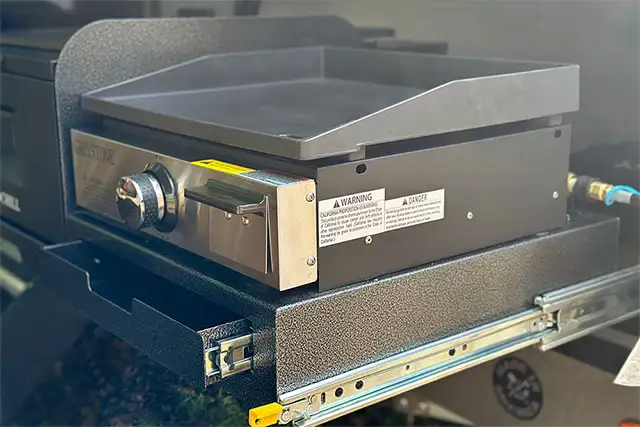
Available exterior equipment includes a pass-through or pull-out kitchen with a 12-volt drawer refrigerator, gas griddle, collapsible sink, cutting board and detachable hot-and-cold water sprayer. An exterior drop-down table and bar stools can expand the working and dining area further.
These are meaningful features in a compact overland trailer.
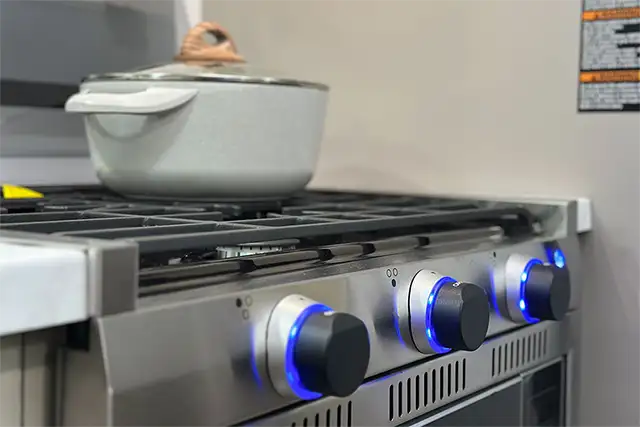
Reboot
- Pull-out or pass-through exterior kitchen
- Exterior drop-down table
- Solid-surface countertops
- Hardwood dinette table
- Convection microwave and interior cooktop
Pause
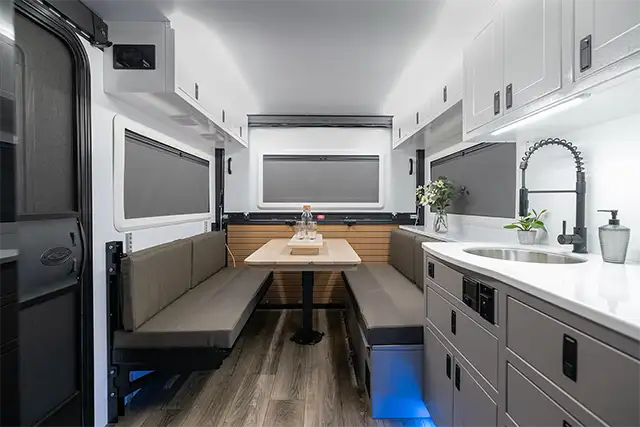
14. Interior Construction
Restart
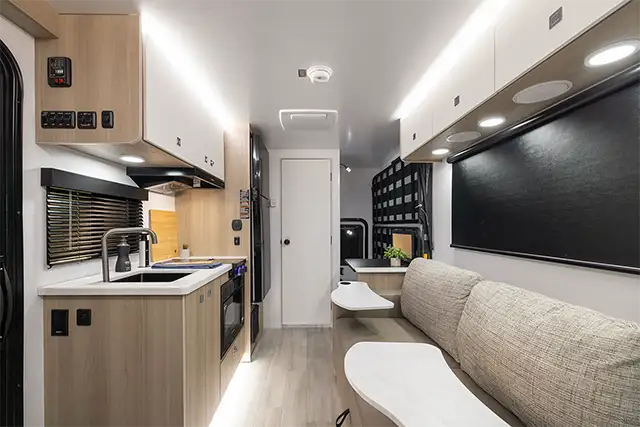
Restart uses European-style engineered wood cabinetry and a more conventional RV interior. This helps keep both weight and price accessible while the body around it retains aluminum-framed laminated construction.
Standard equipment remains substantial: thermo-foiled counters, a porcelain residential-style foot-flush toilet, ABS shower, bathroom skylight, solid entry steps, slam-latch storage doors and a legless power awning with a wind sensor.
Reboot
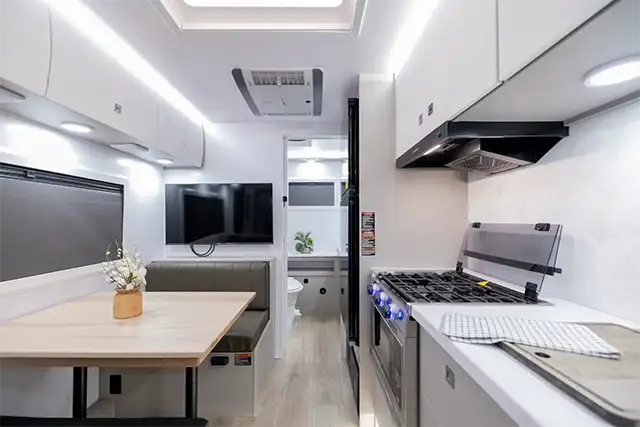
Reboot also uses engineered wood cabinetry, combined with seamless fiberglass interior wall finishes and durable flooring.
The long-term performance of any wood-based cabinet depends on the joinery, fastening and how effectively the chassis, suspension and wall structure isolate it from repeated movement. Reboot’s stronger frame and suspension options reduce the punishment transferred into the interior.
Pause
Pause extends the no-wood approach and uses aluminum cabinetry throughout the lineup, which is about as good as it gets, since it makes the cabinetry essentially moisture-proof.
It is important to highlight that the cabinetry in Restart, Reboot, and Pause X is supported by an aluminum structure, making these units very sturdy.
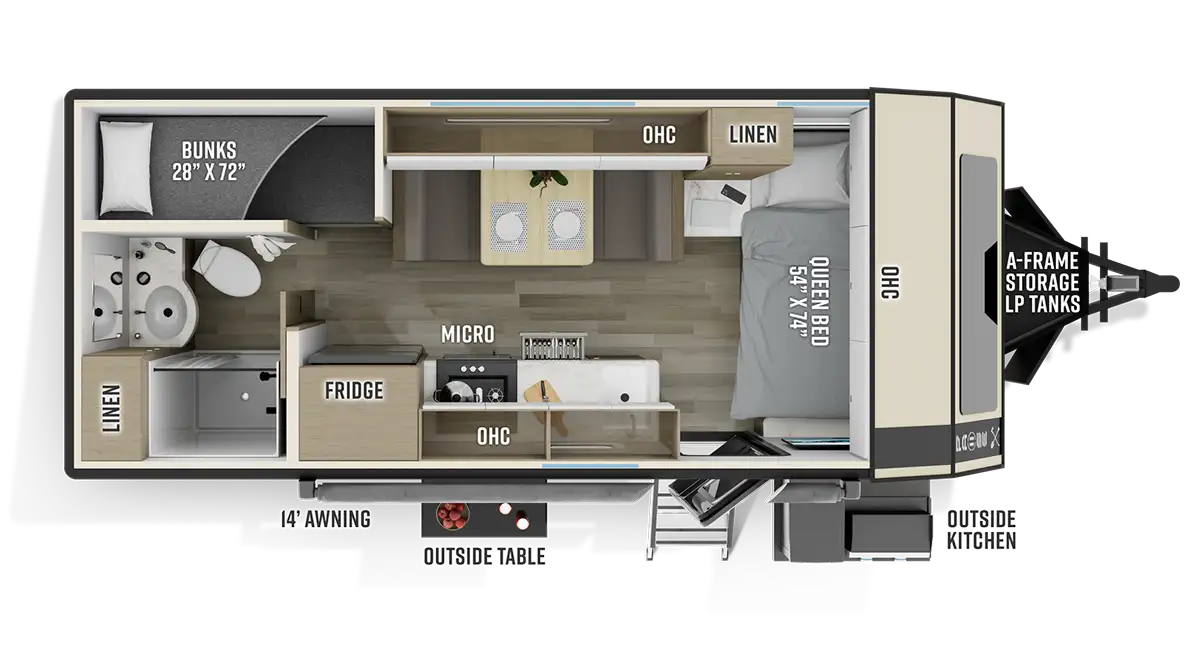
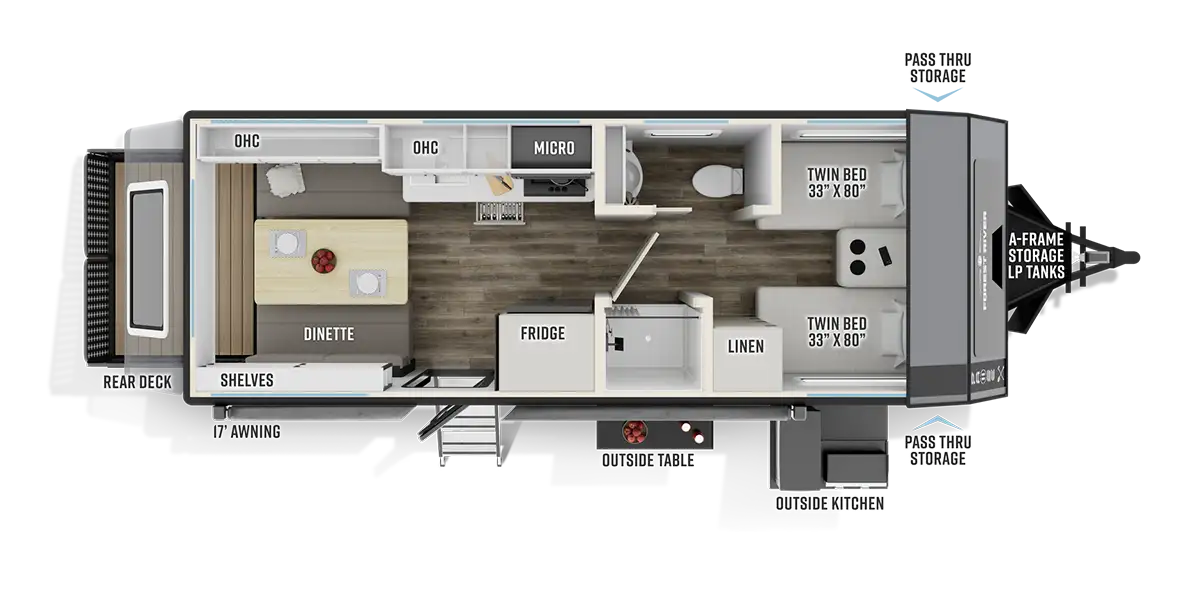
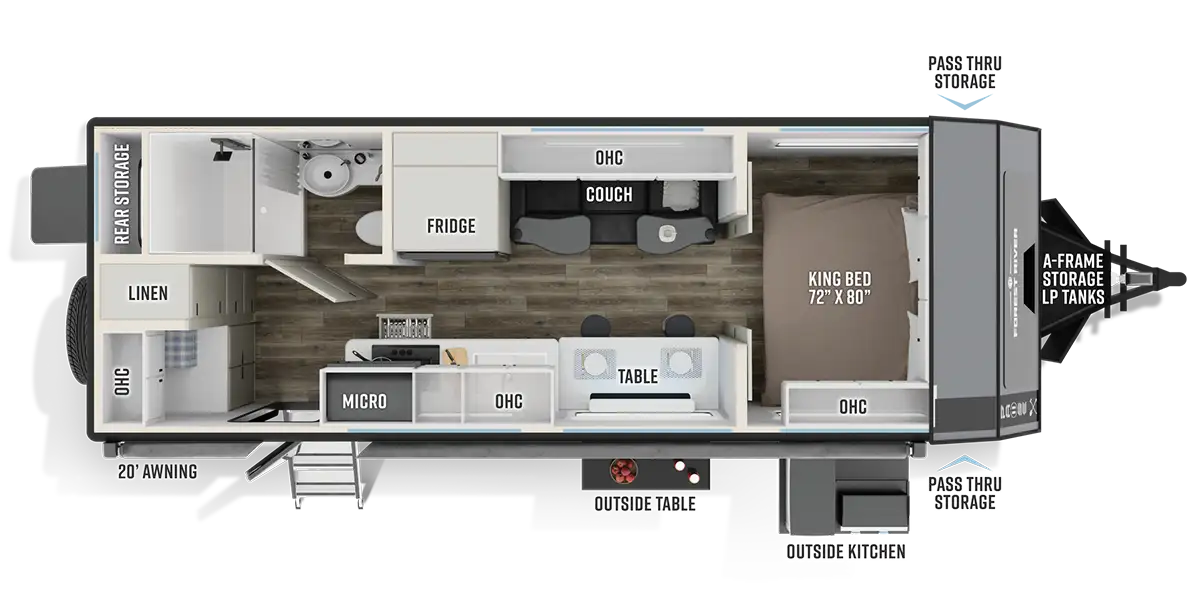
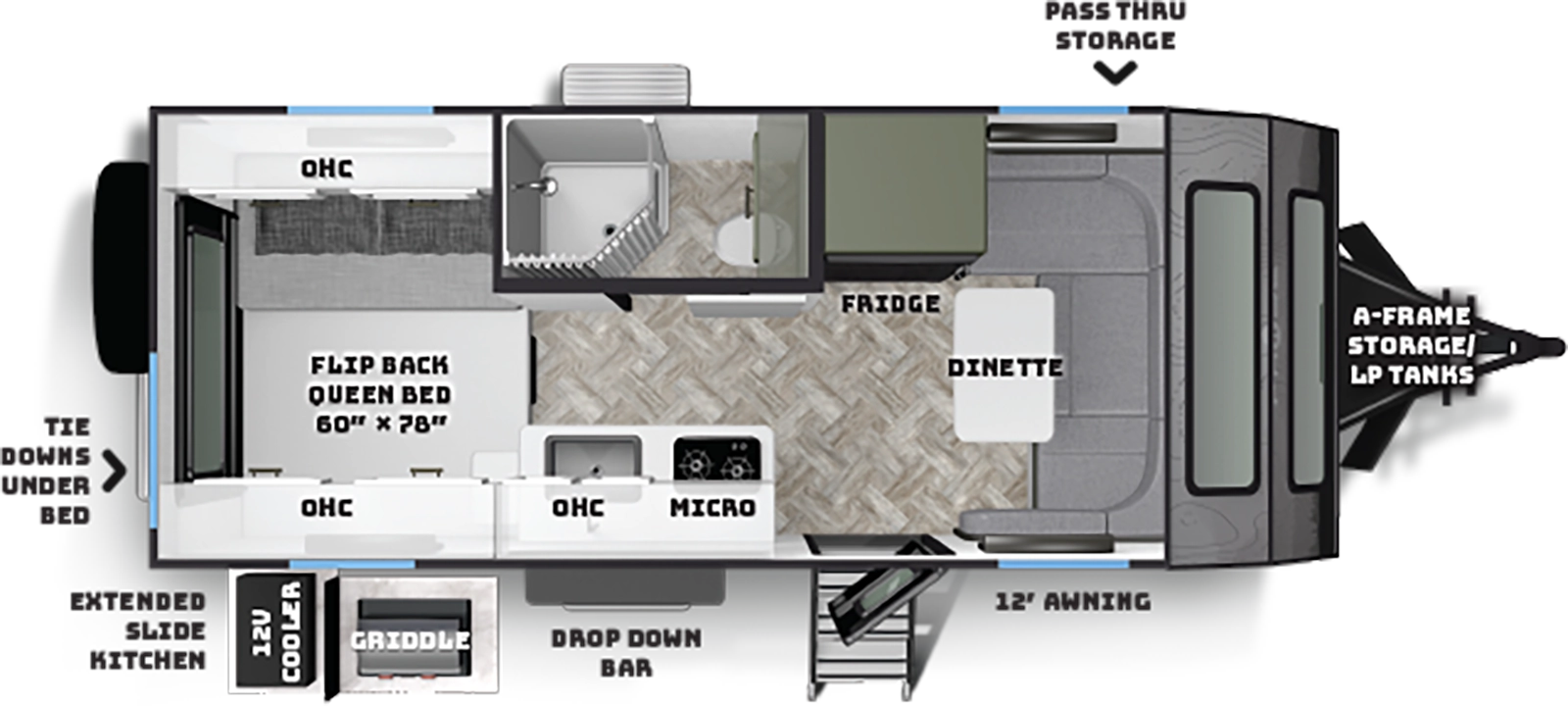
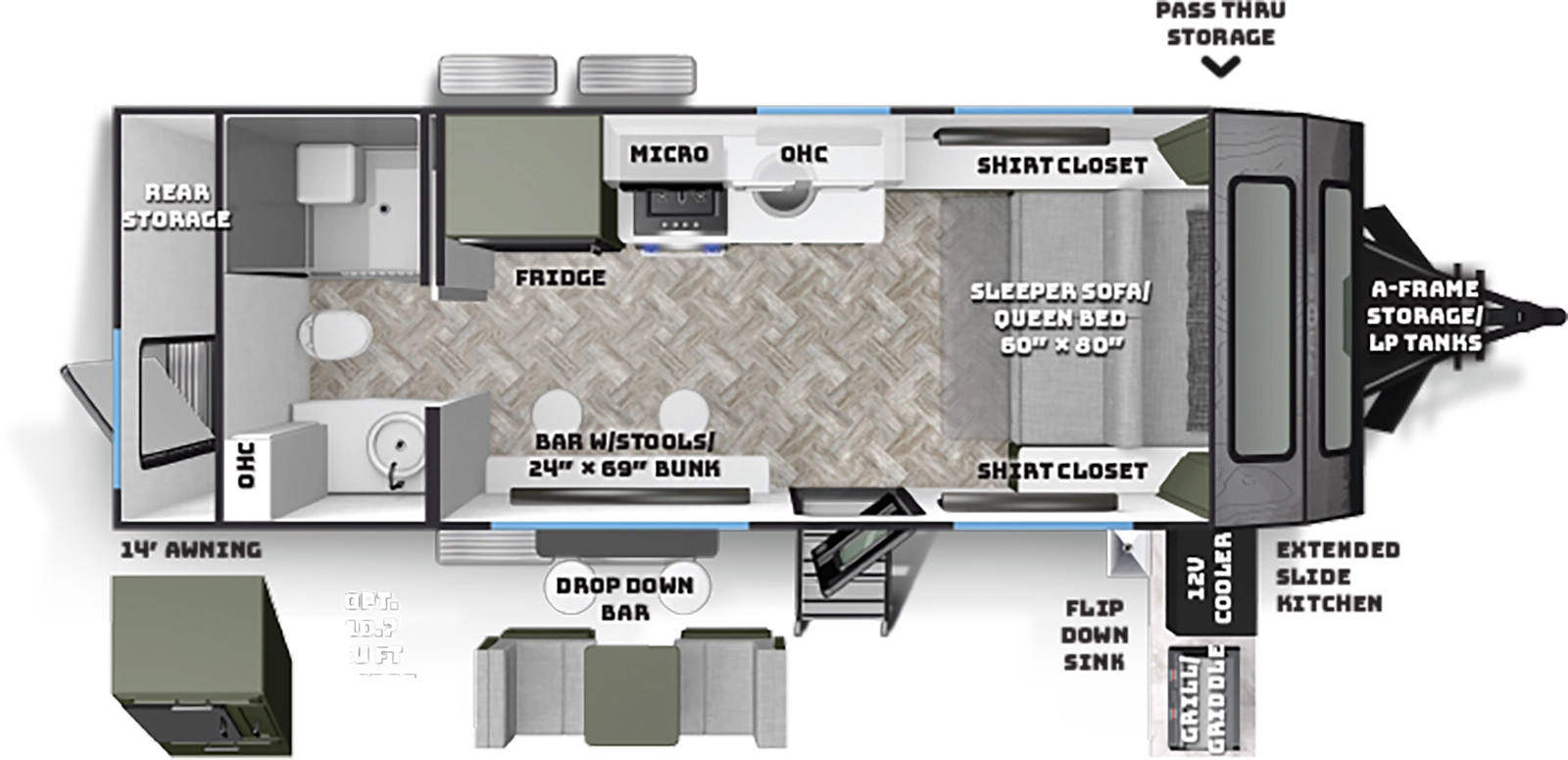
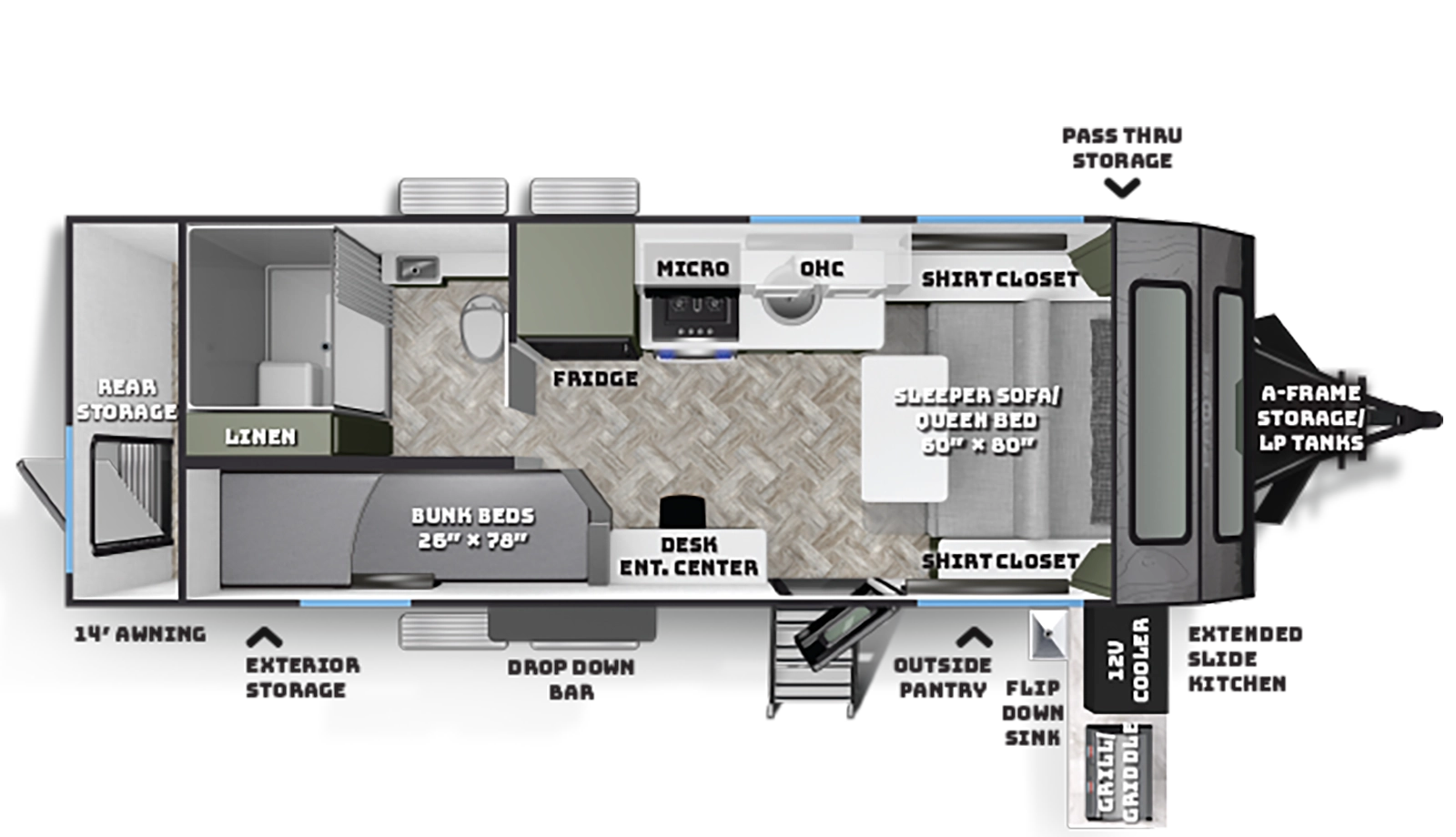
15. Floorplans and Daily Living
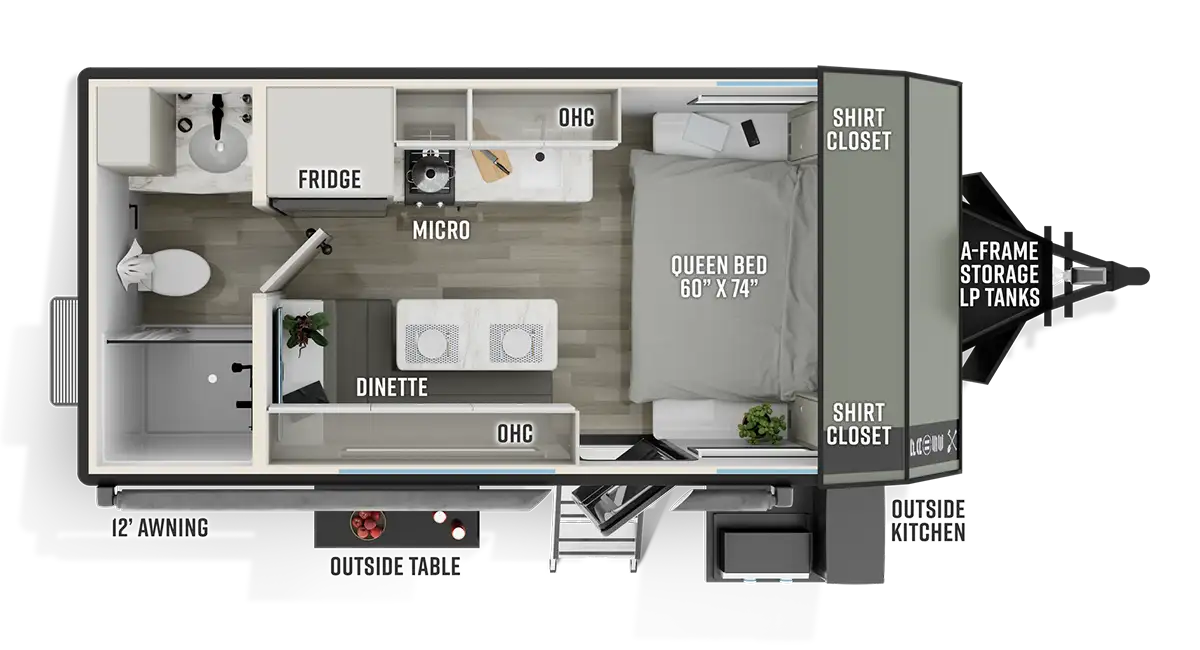
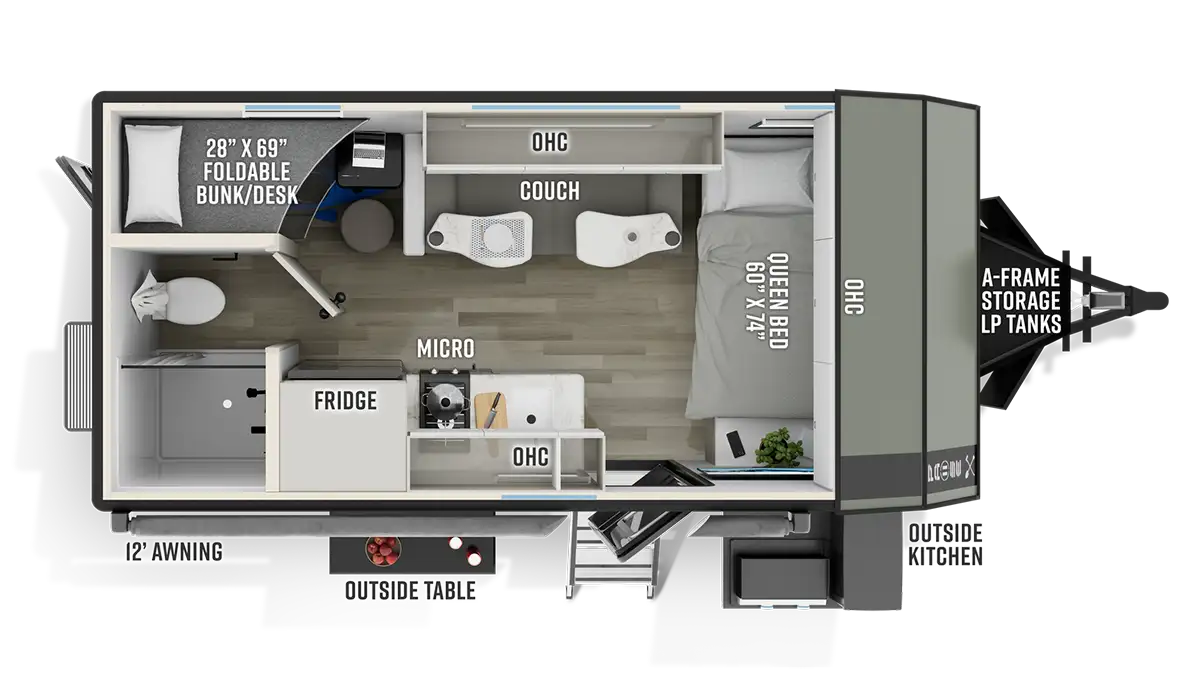
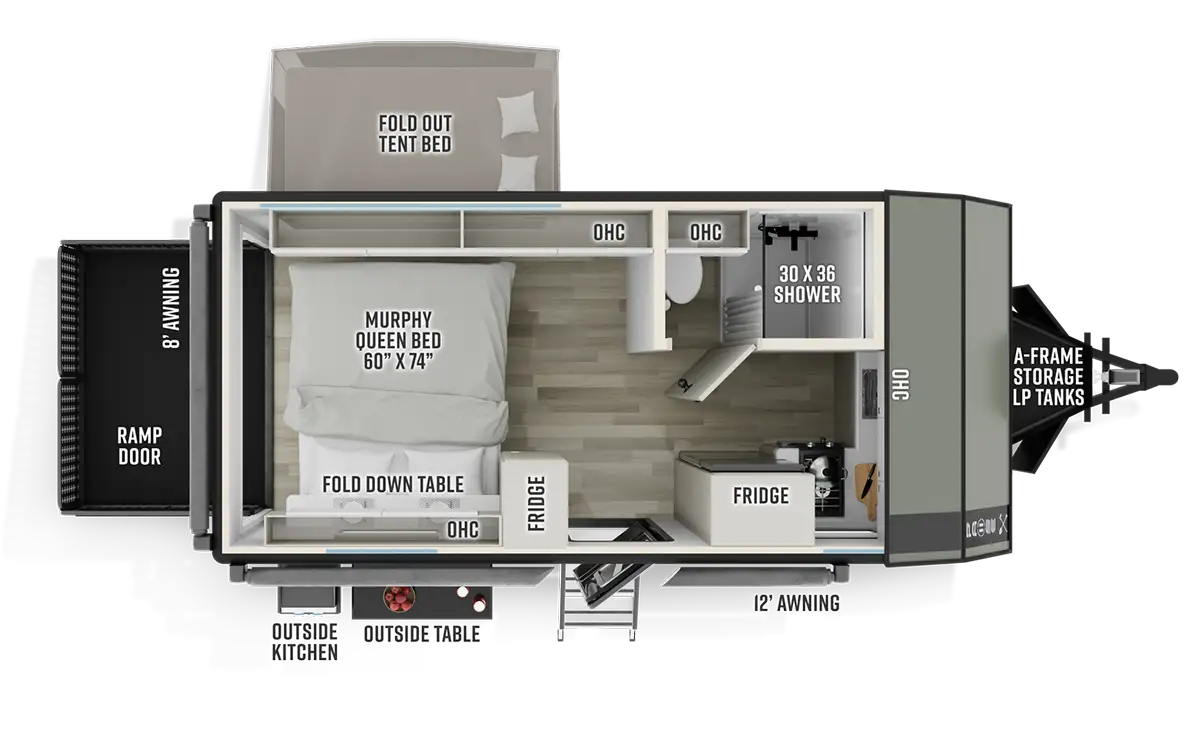
Understanding the Model Numbers
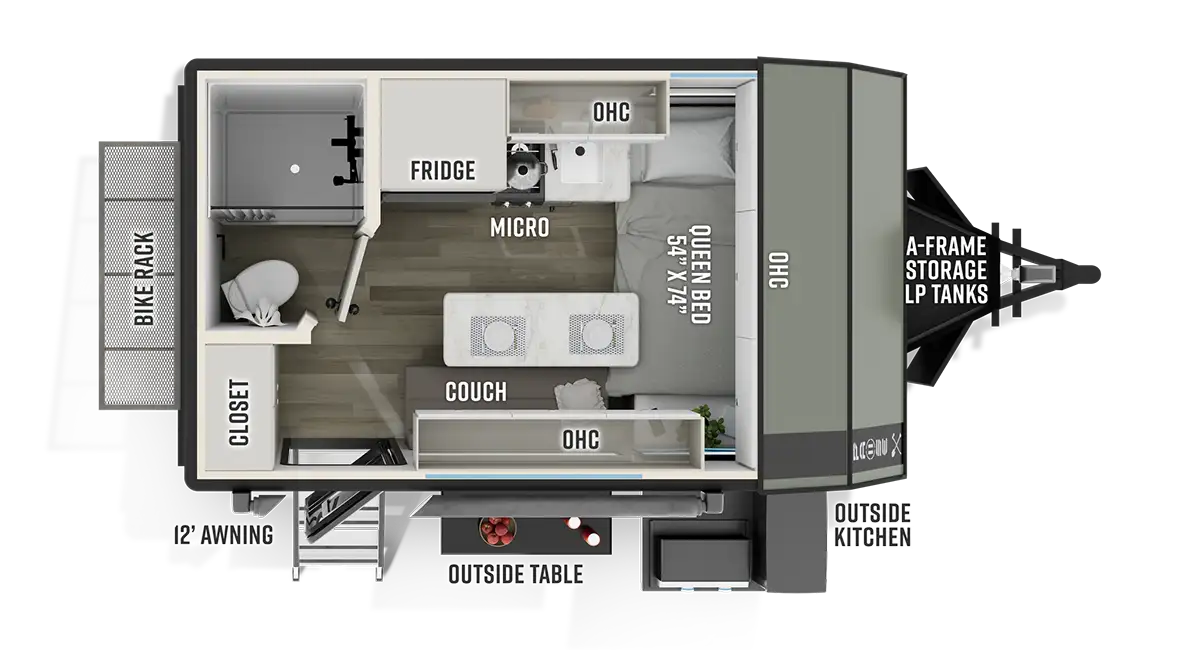
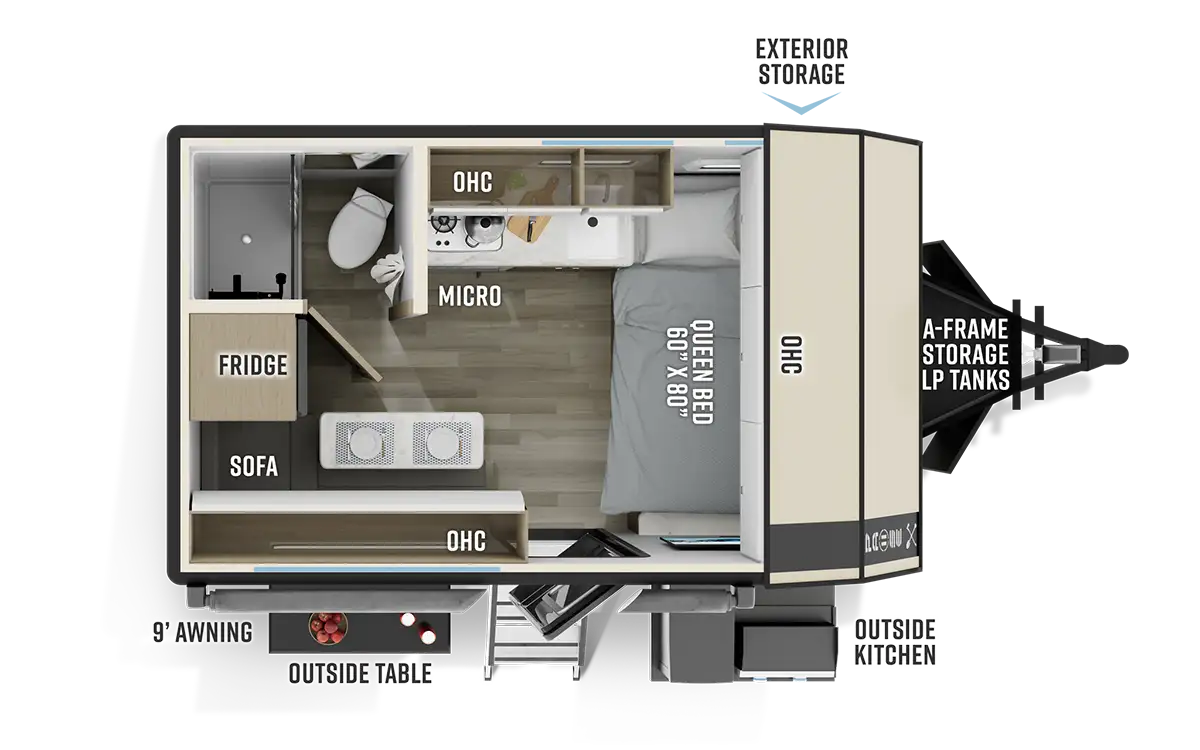
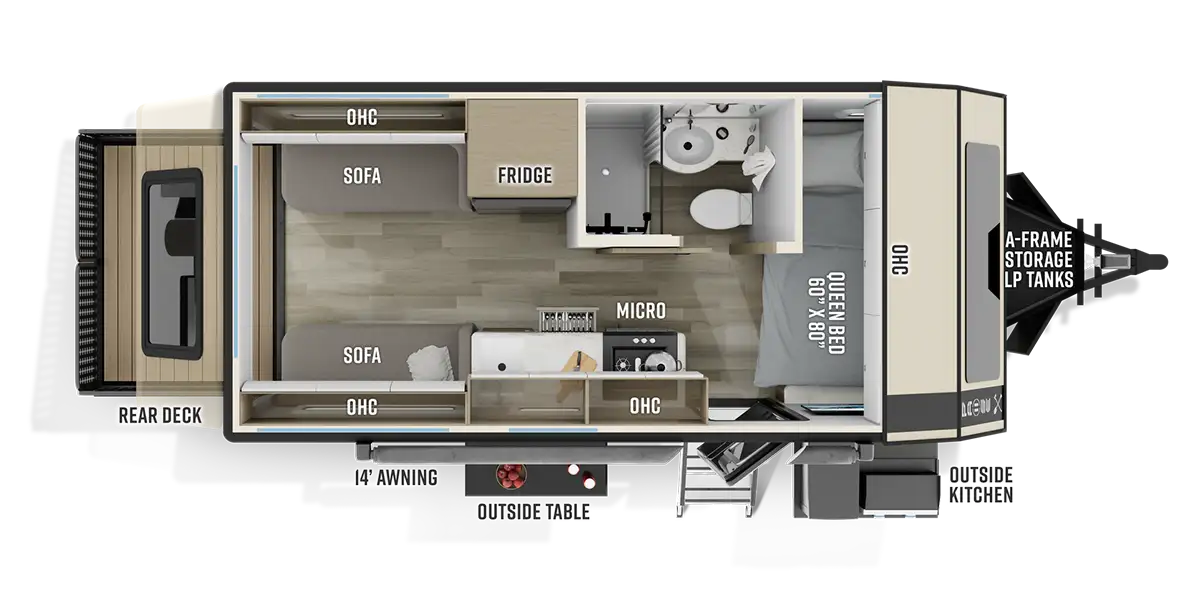
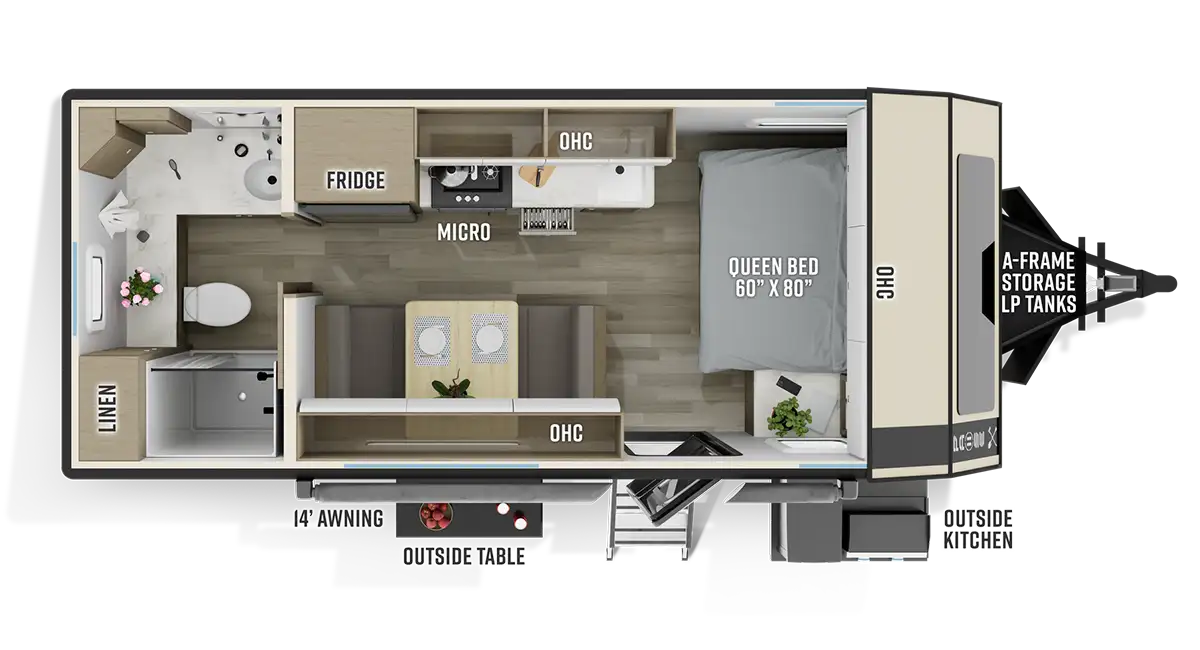
For the dotted Reboot and Pause model names, the number before the decimal indicates the approximate box length, while the final number indicates the intended maximum sleeping capacity. A Reboot 19.6 therefore has an approximately 19-foot living box and sleeps up to six. A Pause 20.3 has an approximately 20-foot box and sleeps up to three.
Restart Floorplans
Reboot Floorplans
Pause Floorplans
16. Controls and Technology
Restart
Reboot
Pause
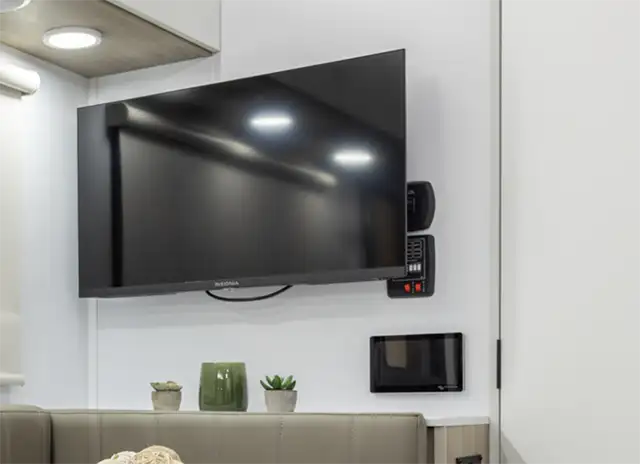
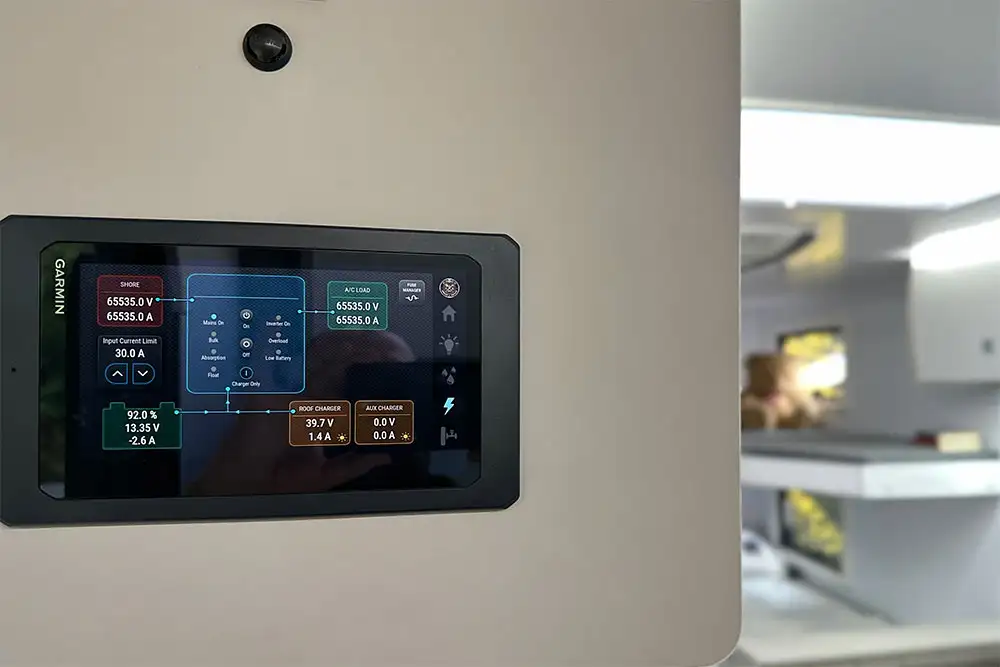
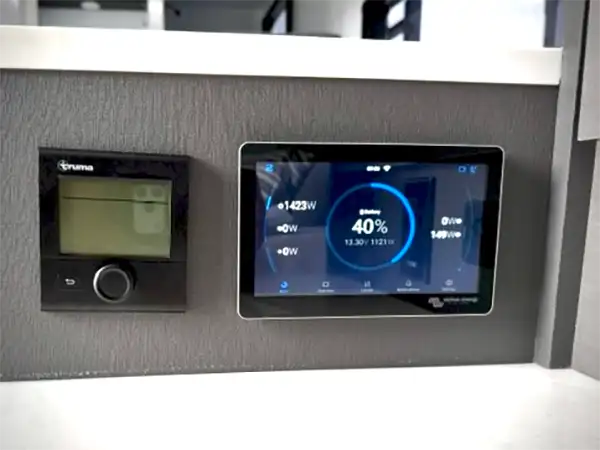
Newer Models Use Both Garmin and a Dedicated Victron Display
Newer Garmin-equipped Reboot and Pause models include both the Garmin interface and a separate Victron monitor. The upgraded with Victron Energy Restart also features Victron display.
Garmin remains the central coach-control platform. The dedicated Victron display communicates directly with the electrical system, avoiding the delay that can occur when electrical information is relayed through another interface and providing more detailed Victron data and control.
17. Standard Equipment, Options and the Real Price Difference
One of the easiest comparison mistakes is to place three base prices beside each other without comparing what is already included.
Restart, Reboot and Pause do not begin with identical systems and then charge different amounts for a badge. They begin at different levels of chassis construction, suspension, power, climate equipment, protection, interior materials and integration.
Restart Pricing Structure
- Victron lithium, solar and 2,000W inverter package
- Pass-through or pull-out exterior kitchen
- Exterior table and stools
- Rear storage or bike rack
- Backup camera
- Side-mounted roof ladder
- Other practical accessories
Reboot Pricing Structure
Buyers can then add:
- MORryde air suspension on the 17.4, 19.4 and 19.6
- Larger lithium and solar packages
- Truma winter package
- Solid-surface countertops and hardwood table
- Exterior kitchen and work surfaces
- Bed and floorplan upgrades
- Starlink preparation and other accessories
- Blackout appearance package
Pause Pricing Structure
Pause includes most of the systems from the outset.
The possible upgrades are:
- Increased battery storage
- Additional solar panels
- Onboard LP generator
- Bike rack
- Starlink preparation
Want to understand the price difference in greater depth?
Click here to read our detailed price guide, which looks beyond floorplans and compares the chassis, suspension, construction, insulation, electrical systems, and other components that drive the cost of a premium overland trailer.
Final Perspective
Restart makes that idea more attainable through a double-coated steel chassis, CURT independent suspension, Reboot-grade walls and roof, a waterproof non-wood floor, heated tanks and selectively available off-grid systems.
Reboot advances it with a huck-riveted aluminum chassis, articulating hitch, TransCore floor, protected underbody, dual-pane windows, standard Victron power and extensive air-suspension, Truma, battery and solar upgrades.
Pause brings the widest range of those systems together as standard. The established 16.4, 20.3 and 21.4 add the full-TransCore body and aluminum interior, while Pause X combines the Reboot-style envelope with the largest floorplan, dual furnaces, aluminum cabinetry, major power capacity and available integrated generator.
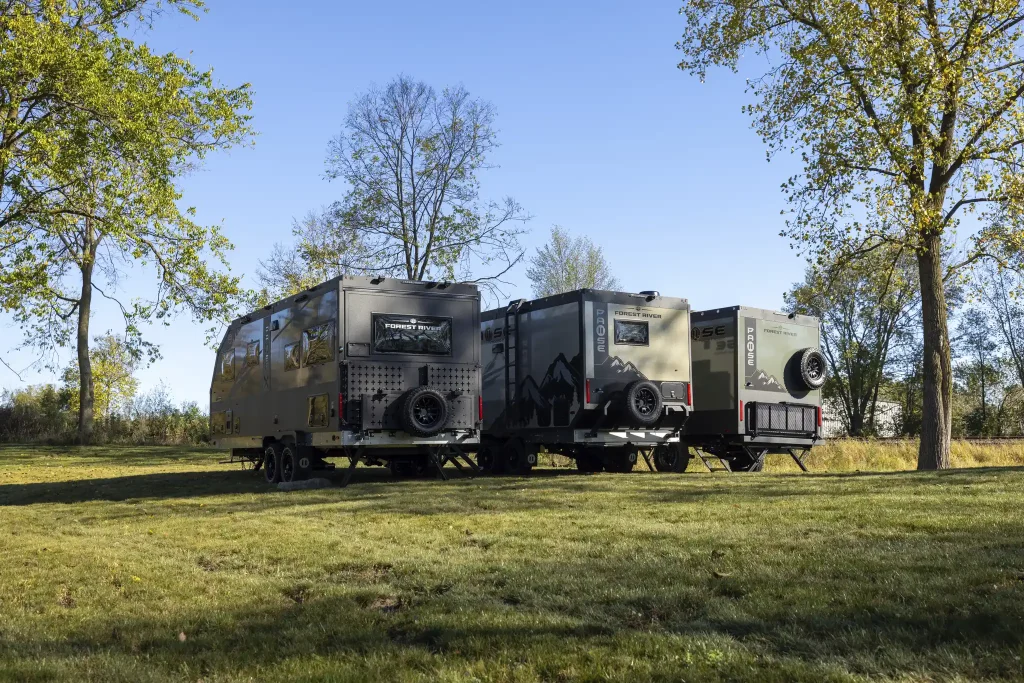
The difference is not simply how each trailer looks, how many people it sleeps or where it can be parked. It lies beneath the floor, inside the walls, around the tanks, behind the cabinets and throughout the electrical, climate and suspension systems.
That is where the price difference is created and where the value becomes clear once the trailer leaves the showroom and begins doing what it was designed to do.
We hope this comparison will help you make an informed decision when you are ready to join the Pause family.
Thank you for reading.
Ready to Explore the Floorplans?
See the complete PAUSE, Reboot and Restart lineup, including specifications, layouts and available configurations.
Looking for a trailer available sooner?