
Trailer Towing Guide for Overlanders: Weights, Truck Matchups and Real-World Tips
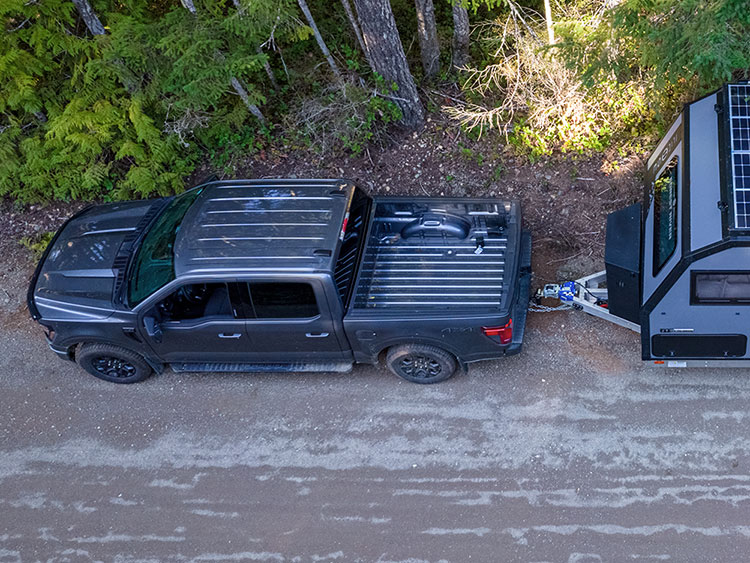
I wrote the first version of this guide when I was new to towing. After a lot more kilometres and a lot more time at the scales, here is the updated version.
This guide is general information. Always confirm ratings with your vehicle and trailer manufacturers and a qualified professional.
The numbers that matter
There are two sets of numbers: the trailer’s and the truck’s. Most towing mistakes come from mixing them up.
On the trailer
- Unloaded vehicle weight (UVW), or dry weight: the trailer as it left the factory, with no water, gear or supplies. Brochures show the standard model; options such as air suspension, extra batteries or solar add weight. A Reboot 19.6 is listed at 6,553 lb (2,972 kg) in standard form, while the unit in my example weighs 7,073 lb (3,208 kg) as built.
- Gross vehicle weight rating (GVWR): the most the trailer may weigh when fully loaded.
- Cargo carrying capacity (CCC): GVWR minus UVW, the weight you can add: water, propane, food, gear. Water counts: every litre weighs about 1 kg, and a 76-gallon (288 L) tank adds about 630 lb (288 kg) when full.
- Hitch weight, or tongue weight: the downward force the trailer's tongue puts on the truck. The brochure shows the dry hitch weight. Loaded, it rises: for a travel trailer, plan on about 10 to 15% of the loaded trailer weight.
On the truck
- Payload: the most weight the truck can carry, including passengers, cargo, the hitch hardware and the trailer's tongue weight. The exact figure for your truck is on the yellow tire and loading sticker in the driver's door frame.
- Truck GVWR: the most the loaded truck may weigh, including the tongue weight it carries.
- Gross axle weight rating (GAWR), front and rear: the most each axle may carry. Also on the door sticker. On a half-ton, the rear axle is often the first limit you reach.
- Maximum trailer weight rating: the heaviest trailer the truck may pull, from the manufacturer's towing guide for your exact engine, axle ratio, cab, box and package.
- Gross combined weight rating (GCWR): the most the loaded truck and loaded trailer may weigh together.
- Curb weight: the truck with fluids but no people or cargo. Estimate it as truck GVWR minus payload from the sticker, or better, weigh it.
- Receiver hitch rating: the label on the receiver states its limits, often lower without weight distribution than with it.
The limit you usually hit first: payload
Most people shop by towing capacity. With a travel trailer, payload is usually the first limit you reach, long before the towing number. Everything in or on the truck comes out of payload: you, your passengers, the dog, the cooler, the tonneau cover, the hitch, and the trailer’s tongue weight. A truck rated to tow 13,000 lb can still be overloaded by an 8,000 lb trailer if its tongue weight plus a family of four exceeds the door-sticker payload.
So, what truck to pick?
Half-ton trucks
Ford F-150, Ram 1500, Chevrolet Silverado 1500, GMC Sierra 1500, Toyota Tundra
- Pros: affordable, comfortable every day, easier to park and to drive on narrow roads.
- Payload: often 1,500 to 2,200 lb (680 to 1,000 kg). Check your own sticker: two identical-looking trucks can differ by hundreds of pounds depending on trim and options.
- Realistic fit: the lighter Restart and Reboot models, loaded carefully, with the right hitch and the towing package. Heavier Pause or Reboot models are a stretch.
- Set-up that matters: the manufacturer's towing package, a weight-distribution hitch, and a good brake controller. Many half-tons come with passenger-car tires (P-metric), which carry less load in truck use than light-truck (LT) tires; LT tires improve stability, but they do not raise any rating.
Three-quarter-ton and one-ton trucks
F-250/350, Ram 2500/3500, Silverado and Sierra 2500/3500
- Pros: payload often 2,500 to 4,000 lb or more (1,130 to 1,800 kg or more), stronger brakes, axles and frames, and plenty of margin for heavy Pause models, water and gear.
- Cons: higher purchase price, more fuel, a firmer ride when empty, and a bigger truck in town and on tight trails.
- Realistic fit: any Pause or Reboot, with room to spare. Choose this class if you carry a lot in the truck, travel full-time, or tow often in mountains.
Real-life example: my F-150 and a Reboot 19.6 with Air Suspension
The truck
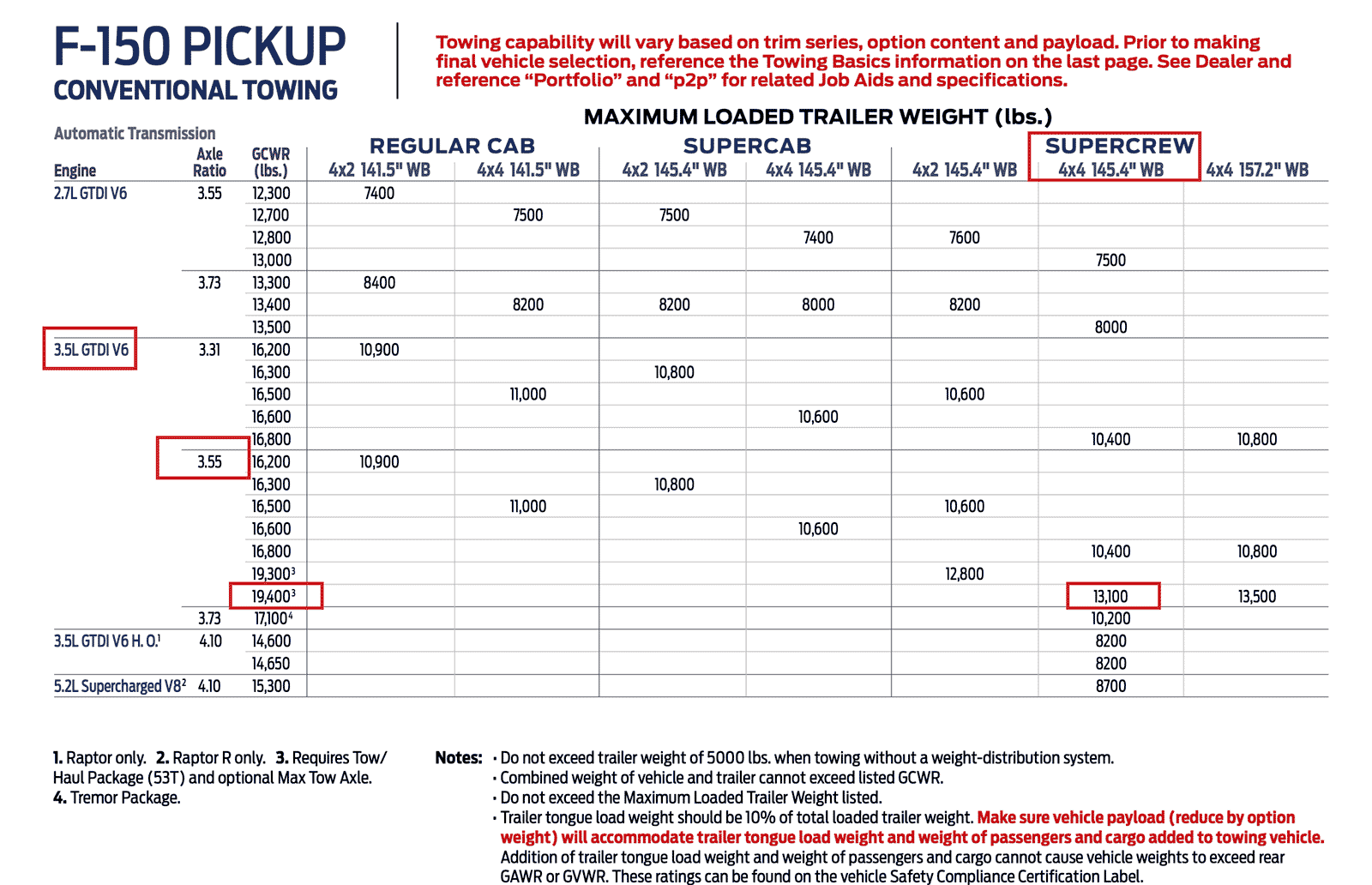
2024 Ford F-150 4×4 SuperCrew, 145-inch wheelbase, 3.5 L V6 EcoBoost, 3.55 rear axle, Max Trailer Tow Package.
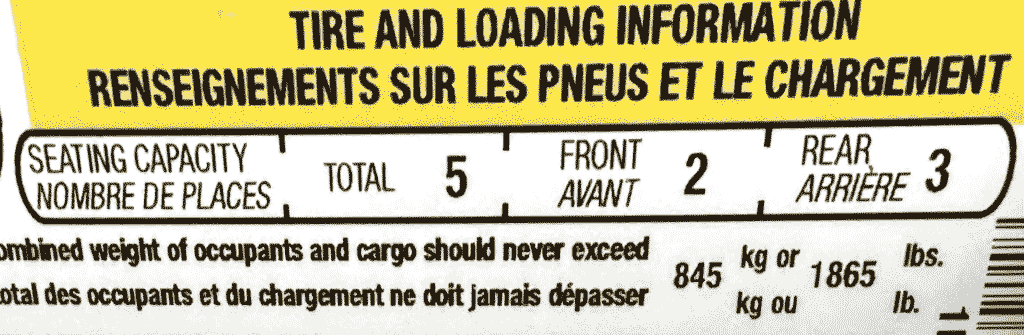
- Payload, the combined weight of occupants and cargo on the door sticker: 1,865 lb (846 kg)
- Truck GVWR: 7,100 lb (3,221 kg)
- GCWR (Ford towing guide): 19,400 lb (8,800 kg)
- Front axle rating, GAWR (door sticker): 3,450 lb (1,565 kg)
- Rear axle rating, GAWR (door sticker): 4,150 lb (1,882 kg)
- Estimated curb weight: 7,100 − 1,865 = 5,235 lb (2,375 kg)
All truck figures come from my door stickers and Ford’s 2024 RV and Trailer Towing Guide; the screenshots are below.


The trailer
Reboot 19.6 with air suspension, 7,073 lb (3,208 kg) as built, GVWR 9,300 lb (4,218 kg), dry hitch weight 895 lb (406 kg). That dry hitch weight is 12.7% of the dry trailer weight, a healthy ratio.
In the truck: my wife, our dog and me, 400 lb (181 kg) combined, and a weight-distribution hitch, about 100 lb (45 kg).
I check two cases: how we usually travel, with the fresh-water tank empty because we fill it at our destination from the water supply there, and the trailer loaded to its maximum.
| Check | Typical trip, no water | Fully loaded trailer |
|---|---|---|
| Trailer weight | 7,073 lb (3,208 kg), as built, fresh-water tank empty | 9,300 lb (4,218 kg), its GVWR |
| Payload used: occupants 400 + hitch 100 + tongue | 1,395 lb (633 kg) | 1,665 lb (755 kg) |
| Payload left, of 1,865 lb | 470 lb (213 kg) | 200 lb (91 kg) |
| Truck weight, curb + payload used, against GVWR 7,100 lb | 6,630 lb (3,007 kg), 470 lb under | 6,900 lb (3,130 kg), 200 lb under |
| Combined weight: curb + occupants + hitch + trailer, against GCWR 19,400 lb | 12,808 lb (5,810 kg), 6,592 lb under | 15,035 lb (6,820 kg), 4,365 lb under |
What this tells me: the F-150 can tow this Reboot, but the limit is payload, not towing capacity. The way we usually travel, with no water in the tank, 470 lb (213 kg) of payload is left in the truck and 2,227 lb (1,010 kg) of cargo capacity in the trailer. Gear loaded in the trailer also adds tongue weight, so it uses some of the truck’s payload too. With the trailer loaded to its maximum, only about 200 lb (91 kg) is left. So heavy gear goes in the trailer, within its cargo capacity, and the truck carries people and little else.
How the weight-distribution hitch helps
On my F-150 the hitch ball sits about 55 inches (1.4 m) behind the rear axle. Without spring bars, the tongue works like a lever: the rear axle carries more than the tongue weight itself, and the front axle gets lighter. That weakens steering and braking.
With the WDH set, the front fender comes back about halfway to its unhitched height. In our usual travel setup, that roughly means:
- The front axle gets back about 190 lb (86 kg) of the 380 lb (172 kg) the tongue lifts off it.
- The extra load on the rear axle drops from about 1,370 lb to 1,050 lb (621 to 476 kg), roughly a quarter less.
- About 130 lb (59 kg) moves off the truck onto the trailer's axles.
With the trailer loaded to its maximum, the shift is larger: about 240 lb (109 kg) back on the front axle and about 170 lb (77 kg) onto the trailer’s axles.
The hitch does not raise any rating. It moves weight to where the truck and trailer are built to carry it.
Weigh it: the only numbers that are certain
Estimates get you close; a certified truck scale tells you the truth. Go loaded as you would travel: people, water, gear, fuel.
Loading the trailer for stability
Tongue weight is not only a load on the truck; it is what keeps the trailer stable. Too little tongue weight is the main cause of sway.
- Aim for 10 to 15% of the loaded trailer weight on the tongue. Less than about 10% invites sway; more overloads the truck's rear axle.
- Heavy items low and close to the trailer's axles, never at the very back or on the rear bumper.
- Know where your water tank sits. A full tank ahead of the axles adds tongue weight; behind them, it removes it.
- Secure everything, inside and out. Loose cargo shifts on rough roads and changes the balance.
- Stay within the trailer's cargo capacity. Water, propane, batteries and gear all count.
Essential towing gear
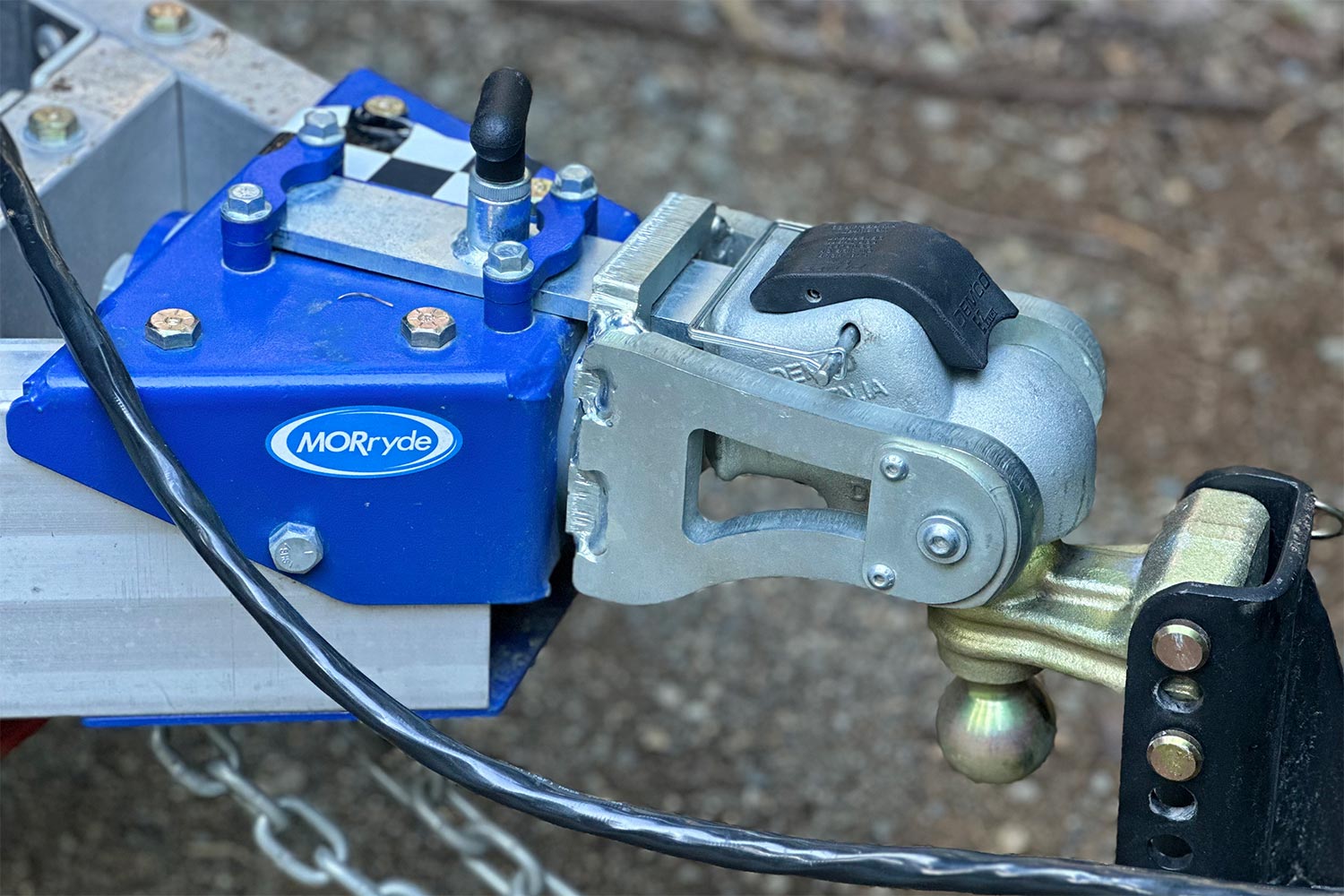
Weight-distribution hitch
Spring bars move part of the tongue weight from the truck’s rear axle back to the front axle and to the trailer’s axles. The truck sits level, steers and brakes properly, and most models add sway control.
Brake controller
It applies the trailer’s electric brakes in step with the truck’s. A proportional controller, or the one built into many recent trucks, brakes the trailer in proportion to how hard you stop. Set the gain with the trailer loaded: at about 40 km/h on a quiet road, the trailer brakes should grab firmly without locking. Re-adjust when the load changes.
Breakaway switch
If the trailer separates, it applies the trailer brakes on their own. Attach the lanyard to the truck itself, not to the hitch or the safety chains, so it still works if the hitch fails.
Safety chains
Rated for the trailer, crossed under the tongue, hooks latched, with enough slack to turn but not to drag.
Towing mirrors
If the trailer blocks your view to the rear, extended mirrors are required.
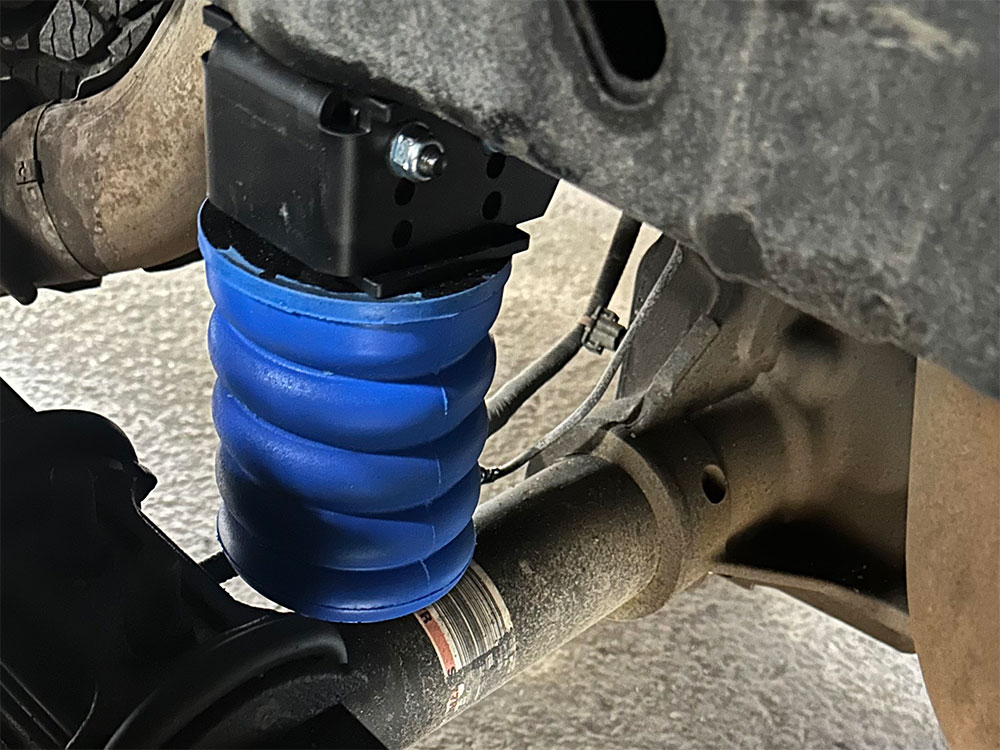
Suspension aids
Airbags, helper springs and SumoSprings level the truck and can improve the ride. They do not increase payload, GVWR or axle ratings. If you need them to stay level, go to the scale and check that you are within your ratings.
On the road: wind, grades and altitude
- Speed and distance: drive slower than you would solo and leave much more room to stop. A loaded combination needs far more distance to stop.
- Wind and passing trucks: slow down in gusty crosswinds and be ready for the push of passing transport trucks. In strong gusts, stop and wait.
- Climbing: use tow/haul mode, watch engine and transmission temperatures, and let the speed drop rather than overheating.
- Descending: choose a low gear before the descent and let the engine hold your speed. Use the brakes in firm, short applications, not continuously. If you smell hot brakes, stop and let them cool.
- Altitude: engines without a turbo lose power as the air thins; turbocharged engines lose much less. Check your owner's manual for high-altitude towing guidance before mountain passes.
- Fuel range: a tall trailer cuts your range sharply. On remote Canadian roads, plan fuel stops before you need them.
Maintenance checklist
Before every trip
- Tire pressure and condition, truck and trailer, spare included
- Lights, turn signals and brake lights
- Breakaway switch test
- Brake controller gain
- Coupler locked, pin in, chains crossed, lanyard attached to the truck
Regularly
- Re-torque the trailer's wheel nuts after the first 80 km and again after 400 km, and after any wheel removal
- Grease the hitch head and spring bars as the hitch maker specifies
- Inspect trailer brakes and wheel bearings on the schedule in the trailer manual
- Follow the truck's severe-service maintenance schedule: towing is severe service for transmission fluid, cooling and brakes
Tow smart, adventure far
Still choosing a trailer? Read our Pause vs Reboot vs Restart comparison to see how the three lineups differ in weight, chassis and equipment.
About the author
Serge Orlov has lived full-time on the road in a Reboot 19.6 with his wife and their dog since September 2025. He writes Overland WBA’s buyer guides from that real-world experience: towing, off-grid power and daily life in a Pause trailer. Follow the journey on his YouTube channel, Grey Whale Tales and Trails.
Ready to Explore the Floorplans?
See the complete PAUSE, Reboot and Restart lineup, including specifications, layouts and available configurations.
Looking for a trailer available sooner?