
Can You Camp in Winter in a Pause, Reboot or Restart? It Depends on Which Winter
“Can I use it in winter?” is one of the questions we hear most. It sounds like a yes-or-no question, but it isn’t. The word “winter” covers very different conditions.
Let us give you the answer first. Pause, Reboot and Restart trailers have a strong foundation for cold-weather use, and they can be used in winter. How well depends on how cold it gets, how windy it is, how long you stay, whether you are off-grid or hooked up, and how the trailer is equipped and prepared. A weekend at -5°C on the coast and a month at -25°C on the Prairies are not the same test. No trailer handles both without preparation.
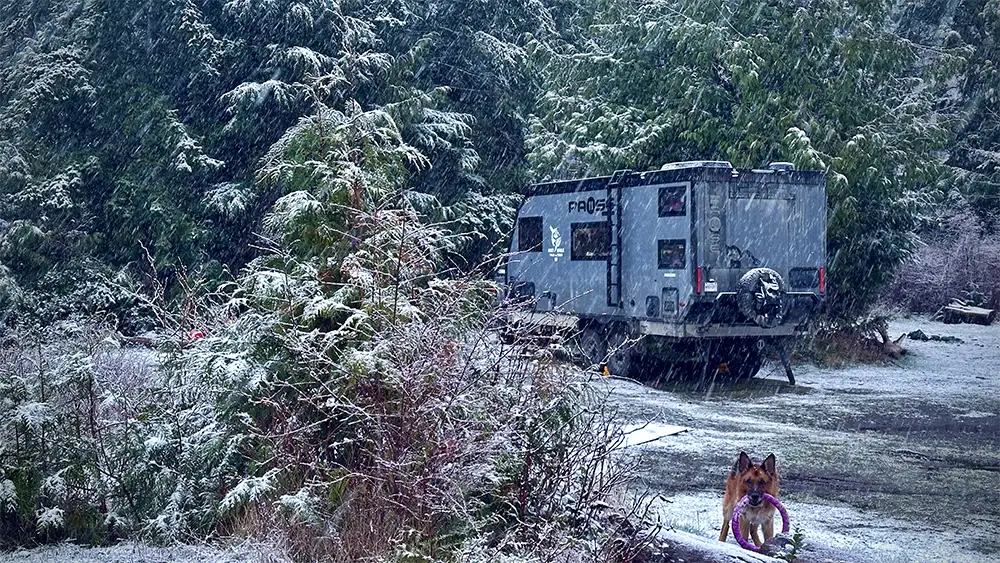
A bit of context: I own a Reboot 19.6 and have lived in it full-time, through winter included. I also cover this topic in the video below.
The Problem With “Four-Season”
Let’s be direct: “four-season” is, in most cases, a marketing term, not a proven capability.
There is no industry-wide standard in North America that defines what a “four-season” RV is. No minimum temperature, no required test, no independent certification. Any manufacturer or dealer can put the label on a trailer. Most of the time it isn’t backed by published test conditions: at what temperature, for how long, with what wind, on what power source, and with which options installed.
A claim only means something when those conditions are stated. “Tested at -20°C for 48 hours with the furnace running and the tanks holding water” tells you something. “Four-season” on its own tells you very little, and it can set expectations that the trailer, or any trailer, can’t meet in every Canadian winter.
That is why we use the term multi-season. It reflects what a well-built trailer actually offers: a solid foundation that extends well beyond summer, with limits that depend on conditions.
“Winter” Is Not One Condition
Before asking whether a trailer can handle winter, ask which winter. These are the factors that decide how any trailer performs:
- Temperature. Around 0°C and -25°C are different problems. As temperatures drop, the furnace runs longer, energy use climbs, and any weak spot matters more.
- Wind. Wind strips heat from every surface and pushes cold air under the trailer. -10°C in a sheltered forest is milder than -10°C in an open field.
- Humidity. Coastal winters are wet; interior winters are dry. Humidity drives condensation, and condensation is often a bigger day-to-day issue than cold.
- Duration. A weekend trip and a two-month stay need different preparation. Short trips forgive a lot; long stays reward every bit of insulation.
- Off-grid or hooked up. This changes everything about how you heat the trailer, and it is covered in detail below.
- Equipment. The heating system and underbelly heating your trailer has make a real difference.
- Preparation. A few simple, inexpensive steps can noticeably change how the same trailer performs.
So the real question is not “Is it a winter trailer?” It is “Is it right for my winter, and what would I need to add?”
What These Trailers Bring to Winter
The walls
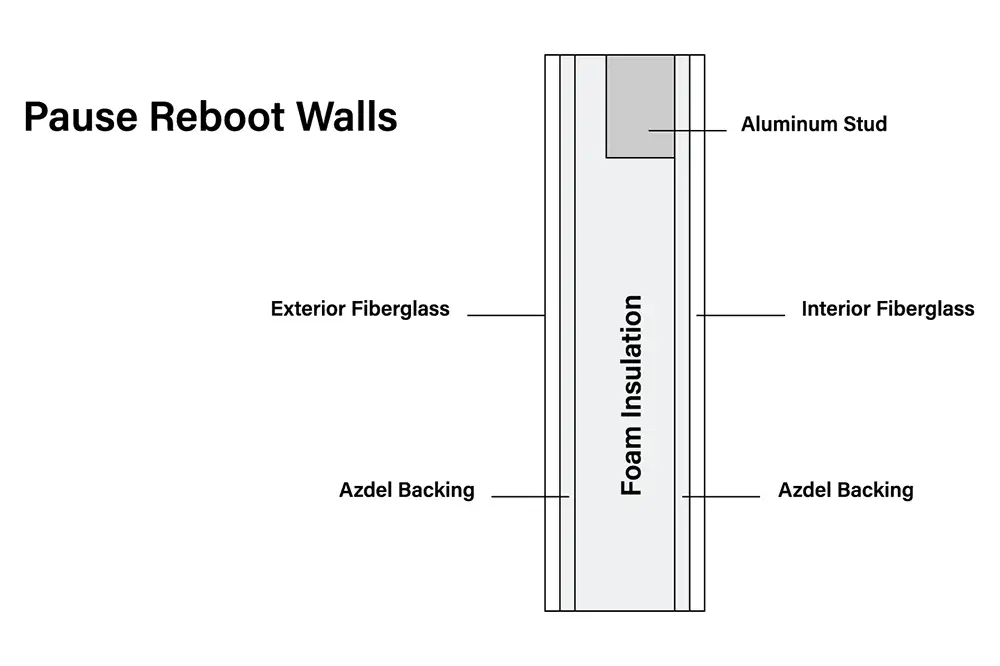
Restart, Reboot and Pause X use the same five-layer wall:
- Exterior fibreglass
- Azdel composite backing, which does not absorb moisture
- EPS foam insulation
- A second Azdel layer
- Interior fibreglass
All of it sits on an aluminum structure, which also supports the cabinetry. It is a very robust envelope.
Aluminum conducts heat, so thermal bridging is a fair question. In the places where it is most likely to occur, the factory offsets the aluminum stud and fills the remaining width with additional EPS, so the stud doesn’t touch the wall skin. This is not done on every stud, only where it matters most.
In practice, the walls insulate very well. On a hot day the outside of the wall can be hot to the touch while the inside stays cool. The same insulation works in the other direction in winter.
The roof
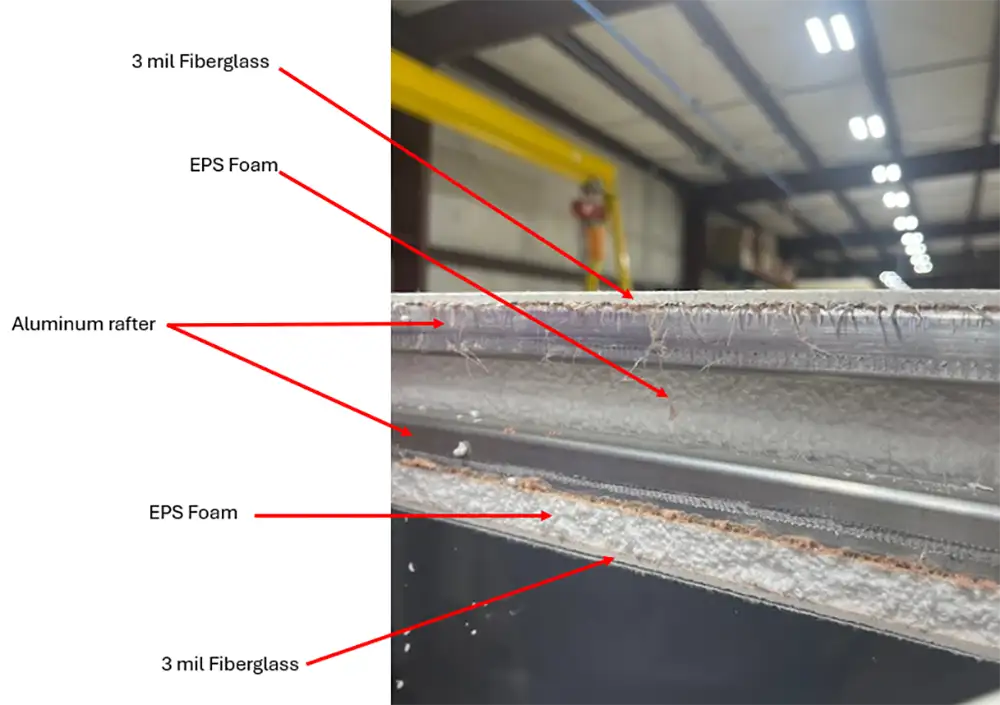
The roof has a thick EPS layer plus an additional layer above it, and it performs very well. Factory photos of how it is built are in our article What Is Behind the Price of Pause Trailers.
The windows
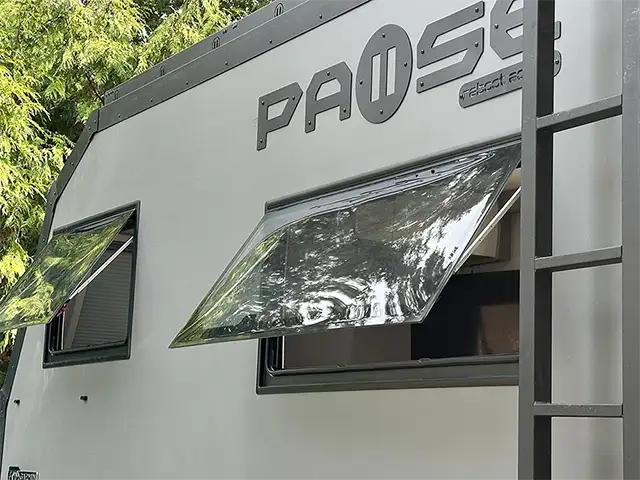
The side and rear windows are dual-pane acrylic, which helps in both summer and winter.
The underbelly and tanks
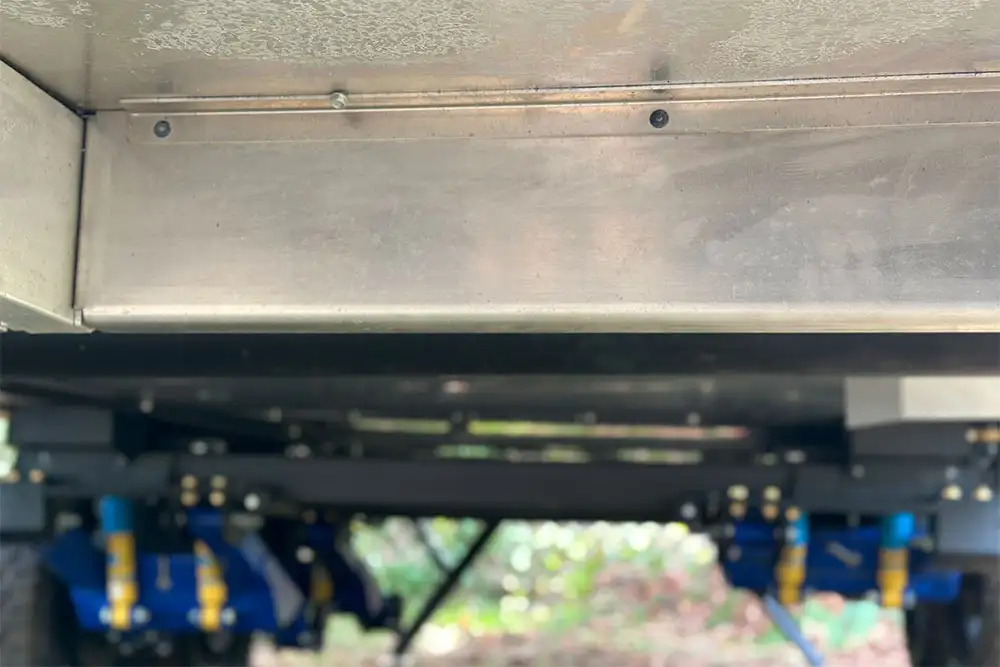
- Protected underbelly: aluminum plates underneath, 1 inch of insulation, and spray foam along the edges to improve airtightness.
- Tank heating pads: fitted to the tanks on every model.
- Reboot: the Truma winter package. It replaces the standard furnace with a Truma VarioHeat that is ducted into the underbelly. When it runs, warm air also flows into the enclosed space around the tanks and plumbing. For sub-zero use on a Reboot, this is the most important option.
- Pause X: a more powerful system as standard. 2027 Pause X models use an Aqua-Hot tankless water heater and a more powerful furnace, with a heated underbelly (heat pads and forced-air heat) included.
Where Heat Is Lost
Every trailer has weaker spots. On these trailers, they are well known and easy to address:
- The front window. It uses a different type of glass and is the weakest point of the envelope in both summer and winter. The Pause X 24.4, the Reboot 14.3 and the Restart models don’t have this front window.
- The skylights. They let heat in during summer and out in winter.
- Window edges. The factory blinds are not reflective, so heat moves through around the frames.
- Wall joints at the front. The joints where the walls meet at the front are a potential thermal bridge.
None of these is a structural problem, and all of them can be improved inexpensively. Common options owners use:
- reflective bubble insulation cut to fit windows and skylights;
- clear plastic window-insulation film on the front window (the kind sold for houses at any hardware store);
- EPS foam board, 1 or 2 inches, cut to fit the skylights or front window and wrapped in reflective insulation;
- added insulation behind removable interior panels at the joints.
Off-Grid or Hooked Up: Two Different Winters
Below freezing, the most important question after “how cold?” is “where does your heat come from?”
Off-grid
Off-grid, your heat comes from propane, and the furnace fan runs on your batteries. Every hour the furnace works costs propane and battery capacity, and that is what limits how long you can stay out.
These are general guidelines, not guarantees:
- Around 0°C to -10°C: with underbelly heating, this is well within the trailer’s comfort zone. Treating the front window and skylights makes it more comfortable and stretches your propane further.
- Below -10°C: the weak spots start to matter. Treat the front window and skylights. If you are somewhere windy, like the Prairies or open country, consider skirting. It isn’t necessary for short trips, but it keeps heat in, so the furnace works less and your propane lasts longer. That matters if you want to extend an off-grid stay, such as a winter fishing trip.
- Below -20°C: plan extra steps. Skirting, careful propane and battery planning, and for some owners an additional heat source.
Hooked up
With shore power, the picture changes. Battery capacity is no longer a concern, and you can add electric heat within what your power connection can supply. That takes much of the load off the furnace and your propane.
One of our customers spent an entire Quebec winter in his Reboot 19.4 while staying hooked up to power. He used an additional electric heater alongside the trailer’s heating system and deployed skirting. With steady power and a sealed-in underbody, a long cold season becomes a very different proposition than the same temperatures off-grid.
In short: the same trailer at the same temperature can be easy or demanding depending on whether you are plugged in. When you plan a winter trip, plan your heat source first.
Condensation: The Part People Forget
A warm, occupied interior in cold weather produces moisture from breathing, cooking and drying gear. In humid regions especially, managing it matters as much as staying warm.
- Ventilation: running the AC in fan-only mode improves airflow.
- An air circulator: these look like fans, but they are built to move air through the whole space. They are inexpensive and effective.
- A proper dehumidifier: small units generally don’t do the job.
Questions to Ask Before a Winter Trip
- How cold will it get, and how windy is the area?
- How long will we stay in one place?
- Will we have hookups, or are we off-grid?
- If off-grid, how much propane can we carry, and how will we refill?
- Does our trailer have underbelly heating (the Truma winter package on Reboot, standard on Pause X)?
- Have we treated the front window (if our model has one) and the skylights?
- How will we manage humidity inside?
If you are unsure about any of these for your plans, contact us. We would rather set realistic expectations than promise conditions a trailer may not meet.
Frequently Asked Questions
Are Pause trailers four-season?
We call them multi-season. “Four-season” has no industry standard behind it and is mostly used as a marketing label. Pause, Reboot and Restart have a strong foundation for cold weather, but winter conditions vary too much for any trailer to perform the same everywhere without preparation.
Is any trailer truly four-season?
Only a claim with stated test conditions means anything: temperature, duration, wind, power source and options installed. Without those, “four-season” tells you very little.
Can I spend a whole winter in one?
It depends on where and how. A customer of ours spent an entire Quebec winter in his Reboot 19.4, hooked up to power, with an additional electric heater and skirting. Off-grid, a long stay in deep cold is possible but takes careful planning of propane, power and insulation.
Will the tanks and pipes freeze?
The tanks have heating pads, and with underbelly heating (the Truma winter package on Reboot, standard on Pause X) warm air reaches the protected underbelly around the tanks and plumbing. That is designed to keep them above freezing in sub-zero conditions. In deep cold or strong wind, skirting adds a margin.
What are the weak spots in winter?
The front window on models that have one, the skylights, the window edges and the wall joints at the front. All can be improved inexpensively.
Do I need skirting?
Not for short trips. For longer stays below about -10°C, especially in windy areas or for a whole season, it reduces heat loss and energy use.
How do I deal with condensation?
Ventilation and air movement: the AC in fan-only mode, an air circulator, and a proper dehumidifier in humid regions.
Final Thoughts
“Four-season” is a promise that rarely comes with conditions attached. We would rather give you the conditions.
Here they are. Pause, Reboot and Restart trailers have well-insulated walls and roofs and a protected underbelly. With underbelly heating, warm air also reaches the tanks and plumbing. Those are the parts that are expensive or impossible to fix later, and they are done well. The weak spots, such as the front window on some models, the skylights and a few joints, are known and cheap to treat.
Beyond that, winter performance is up to the winter you choose: how cold, how windy, how long, and whether you are on propane or plugged in. A coastal weekend needs almost nothing. A Prairie month off-grid needs a plan. A full season hooked up, with skirting and an extra heater, has already been done.
So the useful question isn’t “Is this a four-season trailer?” It is “Do I know its limits, and how will I extend them for my trip?” Answer that, and a multi-season trailer will take you much further into winter than most labels promise.
Thank you for reading.
About the author
Serge Orlov has lived full-time on the road in a Reboot 19.6 with his wife and their dog since September 2025. He writes Overland WBA’s buyer guides from that real-world experience: towing, off-grid power and daily life in a Pause trailer. Follow the journey on his YouTube channel, Grey Whale Tales and Trails.
Ready to Explore the Floorplans?
See the complete PAUSE, Reboot and Restart lineup, including specifications, layouts and available configurations.
Looking for a trailer available sooner?